



USB-C Charging Explained
Power, speed, cables, and compatibility — made simple.
USB-C is now the standard for modern charging, but it’s also one of the most misunderstood. Many people assume that if a cable fits, it should charge fast. In reality, charging speed depends on how your device, charger, and cable communicate with each other.
Use the KEUTEK Cable Finder to match the right cable for your device and charging setup — in seconds.
USB-C Is a Connector — Not a Charging Speed
USB-C describes the shape of the connector, not how fast it charges. Two USB-C ports may look identical but deliver very different power levels.
Some USB-C ports output as little as 5–12 watts, while others can safely deliver much more. The difference comes down to the charging standard and the hardware behind the port.
Key takeaway: USB-C alone does not mean fast charging.
What Is USB-C Power Delivery (PD)?
USB-C Power Delivery (PD) is a smart charging standard that allows devices and chargers to negotiate power safely.
- The charger offers multiple power levels
- The device requests what it can safely accept
- Power adjusts dynamically as the battery fills
This is why USB-C PD can be both fast and safe. Without PD, devices often fall back to slower “basic” charging speeds.
Understanding Watts, Volts & Amps (Without the Math)
You don’t need to be an engineer to understand charging power. What matters most is wattage.
| Power Level | Typical Use |
|---|---|
| 20W | Fast phone charging |
| 30–45W | Phones & tablets |
| 65W | Laptops + phones |
| 100W+ | High-performance laptops |
| 240W | Universal & future-proof charging |
Important: A higher-watt charger does not force power into your device. Devices only draw what they’re designed to accept.
Why the Cable Matters as Much as the Charger
The charger sets the maximum available power — but the cable determines how much power actually reaches your device.
Every cable has a power rating. If the cable can’t support the charger’s output, the charging speed gets limited.
- Everyday USB-C (often up to ~60W)
- E-Marker USB-C cables (commonly 60–100W)
- Next-gen USB-C cables (up to 240W with the latest standards)
USB-C PD vs PPS (Especially for Android)
Some Android devices support PPS (Programmable Power Supply), an advanced extension of USB-C PD that can improve efficiency and reduce heat.
Many Samsung and Pixel devices benefit from PPS. iPhones don’t use PPS, but they still charge quickly using standard USB-C PD.
Why Some USB-C Ports Charge Slower Than Others
- Multi-port chargers may share power across ports
- USB-A ports are more limited than USB-C PD
- Laptop USB-C ports often output lower power than a dedicated PD charger
- Car chargers vary widely in performance and standards
Fast Charging & Heat — What’s Normal?
A little warmth is normal during fast charging. Most devices charge fastest from 0–50%, then gradually slow down near full capacity to protect battery health.
Magnetic Cable & Tip Compatibility (Important)
Magnetic charging systems are cable-specific. Tips only work with the exact KEUTEK cable series they were designed for.
KEUTEK Products That Support USB-C Power Delivery (PD)
Final Takeaway
USB-C charging works best when all parts of the system are aligned — the device, the charger, and the cable. Understanding PD basics helps avoid slow charging, wasted purchases, and compatibility headaches.
If you’re ready to apply what you learned, the options below make it easy to get started.
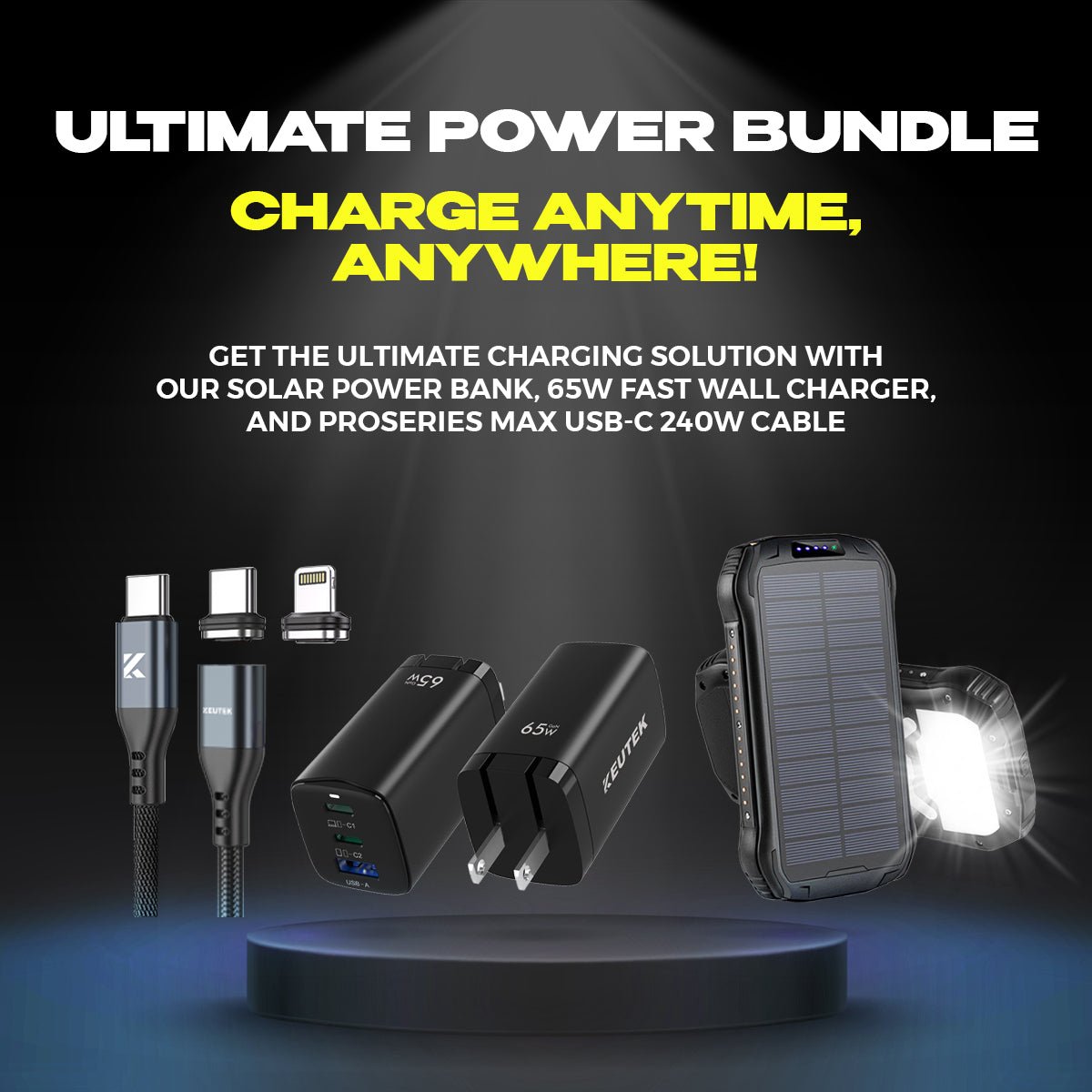
Ready to Upgrade Your USB-C Charging Setup?
If you’re ready to put this into practice, start with a USB-C Power Delivery charger and a PD-rated cable designed to work together.
Save $41.00 compared to buying items individually when you choose a bundle.
View PD bundle →