

Portable Power Station for Camping: A Practical Guide

A dead phone or a warm camp fridge can quickly ruin a weekend in the woods. Stable campsite power keeps your main gear running so you stay safe and warm.
A portable power station for camping is a quiet, rechargeable battery that provides clean electricity for your key gear when you are off the grid. To choose the right size, you must add up your daily power needs by multiplying device watts by hours of use to find total watt-hours. A standard weekend setup for phones and lights needs about 200 to 400 watt-hours, while adding an electric fridge needs at least 1,000 watt-hours. Pairing your battery with portable solar panels lets you recharge during the day, which keeps your outdoor equipment running for several days in a row.
Before you invest in a battery, you must understand exactly how much energy your campsite gear will use. To help you plan your next trip, we will first look at What Can a Portable Power Station Power at Camp? Our review of the best options begins with:
Get the KEUTEK 300W Portable Power Station Max to keep your campsite fully powered from setup to sunrise.
What Can a Portable Power Station Power at Camp?
When you camp, keeping your gear charged is key to safety and comfort. A power station lets you run devices far from the main power grid. From small phones to vital safety tools, a good power source keeps your campsite running. KEUTEK builds tough power gear to make off-grid life simple. This rugged design has earned a 4.96/5.0 rating across more than 41,000 reviews.
Device charging at camp
Your personal devices are your main link to the outside world. Campers need power for phones, laptops, and GPS units. Keeping these tools alive is critical for map use and trail safety. This is also true for field crews working in remote zones for several days. These teams must recharge batteries for cell phones, cameras, and GPS receivers to stay safe and maintain their work. They do this with portable power options as shown in USDA Forest Service field guides. A small station keeps these devices ready.
The KEUTEK 300W station can charge up to six devices at once. This unit has a 256Wh LiFePO4 battery that holds plenty of charge. It offers a fast-charging USB-C port that outputs 60W, which is perfect for laptops. It also has a USB-A port that gives 18W of power. Browse the fast charging portable power collection to find the best gear for your campsite. Fast ports mean you spend less time waiting and more time exploring.
Camping gear and lights
Beyond personal gear, a campsite needs power for comfort and safety. Campers use power stations to run LED lights, small fans, and other gear. Good lighting keeps your camp safe after the sun goes down. The KEUTEK station has a built-in 1W LED light. This light has three brightness levels and an SOS signal for safety. The SOS mode helps you signal for help if you get lost or hurt in the woods.
A power station can also run a small 12V cooler to keep your food and drinks cold. These electric coolers use very little power when plugged into a DC port. Running a cooler on DC power saves much more energy than using an AC outlet. This saves battery life and keeps your station running longer. You can also plug in small camping fans to stay cool during hot summer nights. These small tools make a big difference in how much you enjoy your outdoor trip.
CPAP and safety gear
For many people, outdoor trips mean taking vital medical gear along. If you use a CPAP machine, you need a sure way to keep it running through the night. You can use a portable power station for camping to support your CPAP machine alongside your other gear. This setup ensures you can breathe easily and sleep well in the wilderness. Knowing your medical gear has a steady power source gives you peace of mind.
To get the most out of your battery, you should use the DC adapter for your CPAP machine. Plugging straight into the DC port avoids inverter losses. This simple step can double the runtime of your machine on a single charge. Plan your power needs. Doing so lets you enjoy the great outdoors without risking your health. A rugged, off-grid power station makes it easy to stay safe and relaxed under the stars.
How to Choose the Right Portable Power Station for Camping
Campsite power requirements
Field crews working at remote sites often need to recharge critical tools like phones, lights, and GPS units. The USDA Forest Service stresses that careful power planning is key to keeping these tools running. At camp, your power needs are much the same. You must find how many watts each item uses. Multiply that by the hours you will run it to get your daily watt-hour total. Here are typical device power needs to help you plan for a weekend at camp.
- Smartphones: 5 to 10 watt-hours per charge.
- LED camp lights: 5 to 15 watts per hour.
- Laptops: 50 to 100 watt-hours per charge.
- Portable coolers: 30 to 60 watts per hour.
Instead of asking which brand to buy, look at your gear. Let your daily watt-hour needs choose the box for you. If you only want to power a phone and a few camp lights, a small unit is perfect. These basic setups mostly need about 200 to 400 watt-hours of capacity, but a small fridge will cause your power needs to rise quickly.
Sizing your battery capacity
For car camping without a fridge, a 500 watt-hour unit is enough for a weekend trip. This size can run phones, lights, a fan, and a laptop. For one to three nights, a 500 to 1000 watt-hour station is a safe choice. But if your trip includes a 12V fridge, you need a unit with at least 1000 watt-hours to keep food cold.
Always add a 20% to 30% capacity buffer to your final plan. This extra power handles real-world losses from heat, cold, and battery aging. It also covers the energy lost when the station converts power to run your gear. Having a buffer means you will not drain the battery to zero each night, which helps the cell last longer.
Matching power to your gear
If you want a light and rugged portable power station for camping, look at the KEUTEK 300W Portable Power Station Max. This unit has a 256 watt-hour battery and weighs just over six pounds, making it easy to pack. It can power six devices at once and features a multi-level LED light that serves as a camp light or an SOS signal. This makes it a great choice for both fun trips and home backup.
To make the most of this unit, read our full 300W station guidance before you head out. It covers key safety tips and lists exactly what the station can run. Knowing these limits helps you avoid dead batteries during your off-grid stay. Planning your power needs ahead of time ensures a safe and easy trip.
Related products


How to Size a Power Station for a Weekend Trip
Planning camp power is simple. But you must find the right battery size before you pack. A small power source means dead gear. Yet a massive battery pack adds heavy, useless weight to your gear. You can find the sweet spot with ease.
Why Sizing Matters
Many campers just guess their needs. Because of this, they often end up with dead gear at night. But you can avoid this trap. Just like federal field crews who need to recharge batteries for critical devices in remote forests, you must make a smart plan first. Find the watt draw of each tool you bring. This keeps your campsite fully powered and safe.
For smaller setups, you can read our 300W station guidance online. This guide shows what a small unit can do. You must match your gear to the battery size. Let us see how.
How to Run the Numbers
You can use simple math to size a portable power station for camping. It takes just a few steps. Follow this plan to find your needs for a weekend trip:
- Find the watt draw of each device. Look at the label on your phone, light, or fan to find the Watts. DC ports are best because they save power. If you use the AC plug, the inverter wastes about 10% to 15% of your energy.
- Work out your daily draw. Multiply device Watts by the hours of use per day. This math gives you the daily draw in Watt-hours. For example, a 10-Watt light run for four hours needs 40 Watt-hours a day.
- Add the daily draws. Combine the numbers for all your devices. This sum is your total daily camp draw. It shows the energy you will use each day.
- Multiply by the trip days. Multiply your daily draw by the days you plan to spend off the grid. For a basic weekend trip, multiply by two. This gives you the total power you need.
- Add a safety buffer. Multiply the total trip power by 1.2 to add a 20% buffer. This extra power is key. Cold air, heat, and aging cells can lower how much power your battery can hold in the field.
A Real Camp Example
Let us walk through a real weekend camp example to show how this math works. Imagine you want to power two smartphones, some camp lights, a small fan, and a laptop. This is a common setup for a two-day trip. We will run the numbers to find the size you need.
Say you charge two phones first. They draw 10 Watts and take 1.5 hours to charge, which uses 15 Watt-hours. Next, you run camp lights. At 5 Watts for 3 hours, the lights use 15 Watt-hours. A small fan draws 6 Watts. Running it for 4 hours takes 24 Watt-hours. Lastly, your laptop draws 30 Watts for 1 hour, which adds 30 Watt-hours. Add these up, and you get 84 Watt-hours each day.
For a two-day trip, your base need is 168 Watt-hours. Next, multiply that by 1.2. This adds your buffer. The final target is 202 Watt-hours. A 256-Watt-hour unit like the KEUTEK 300W Portable Power Station Max is the best choice. This rugged box gives you plenty of juice. It weighs only 6.4 pounds, which makes it easy to carry anywhere.
Portable Power Station vs Generator: Which One Should You Choose for Camping?
Choosing how to power your campsite is a big decision for any trip. Most campers must choose between a modern battery-powered system and a classic gas engine. While both options supply power, they work in very different ways. A portable power station for camping acts as a large, rechargeable battery that stores clean energy. In contrast, a gas generator uses a combustion engine to make power on demand. This basic difference affects noise, safety, and convenience at your campsite. Understanding these differences helps you choose the best power source for your needs.
Quiet power for campsites
For most camping trips, a battery station is the best fit. These units run in total silence. They produce no exhaust or dangerous fumes. This means you can keep a station inside your tent or sleeping area without any safety risk. They are also highly safe for sensitive electronics. This clean inverter power is vital for phones, laptops, and medical gear like CPAP machines. For a compact and capable option, the KEUTEK 300W Portable Power Station Max is a great choice. It weighs just over six pounds but can run six devices at once. This makes it easy to pack and carry to any remote site.
When gas generators are needed
But gas generators still have a place in the outdoors. They excel at running heavy AC loads that need huge amounts of energy. If you need to power a large RV air conditioner or heavy kitchen gear, a generator is often needed. But they are very loud. Most campgrounds have strict quiet hours that ban generator use at night. They also need you to carry heavy liquid fuel and do regular engine care. This makes them less useful for quick weekend trips. According to a USDA Forest Service report, choosing the right battery power sources is critical in remote fields. They are much safer and more reliable than gas engines. If you only need to power basic gadgets, a battery station is the safer and quieter path.
| Feature | Portable Power Station | Gas Generator |
|---|---|---|
| Noise | Completely silent during use. | Loud motor noise, often 50 to 70 dB. |
| Fuel | Rechargeable battery, via solar or wall. | Liquid gasoline, diesel, or propane. |
| Maintenance | No maintenance required. | Frequent oil changes and engine care. |
| Runtime | Limited by battery watt-hour size. | Continuous if you keep adding fuel. |
| Safety | No exhaust fumes, safe inside tents. | Produces carbon monoxide, outdoor use only. |
| Device Safety | Clean pure sine wave inverter power. | Unregulated power that can harm electronics. |
| Best For | Phones, laptops, CPAP, and car camping. | RVs, air conditioners, and heavy tools. |
Can a Portable Power Station Run a Camping Fridge?
A camping fridge is a great upgrade for outdoor trips, but it is also the biggest draw on any camp battery. Yes, you can run a camping fridge from a portable power station, but you must plan well. Without a proper setup, you risk running out of power quickly, which leaves your food warm and unsafe. Sizing your power source well ensures that your gear stays cold for the entire trip.
Campsite fridge power needs
When you plan to run a camping fridge, you need to look at total watt-hours. A guide from Camp Gear Rated warns that running a fridge on a small battery will soon leave you with warm food. For long off-grid trips, experts say you need a capacity of at least 1000Wh. This size ensures your fridge can cycle on and off without draining the battery too fast.
Reducing energy loss with DC connections
Most camping fridges are built to run on 12-volt DC power. You should plug your fridge right into the DC port of your station rather than using the AC outlet. Running on DC power keeps your system efficient and saves battery life.
The AC inverter in a power station has to convert stored battery power. This process leads to energy loss. Research on sizing camping batteries shows that using the AC outlet causes you to lose about 10% to 15% of your power. Plugging right into the DC port avoids this loss.
Matching station capacity to your fridge
A compact portable power station for camping, like the 300W Portable Power Station Max, is great for smaller devices but cannot run large cooling systems. It has a 256Wh capacity that is best for phones, laptops, and camp lights. This kind of careful planning is vital when you head off-grid. Even the U.S. Forest Service stresses the need to match your power sources with your gear to keep devices running in remote areas.
If you want to use a smaller station for a camping fridge, you must pair it with a solar panel. You can find high-quality panels in our Solar Panels collection. During the day, the solar panel recharges the battery while the battery runs the fridge. This simple setup helps you maintain a steady flow of power, which keeps your food safe and your gear charged.
What Solar Recharging Options Work on Extended Camping Trips?
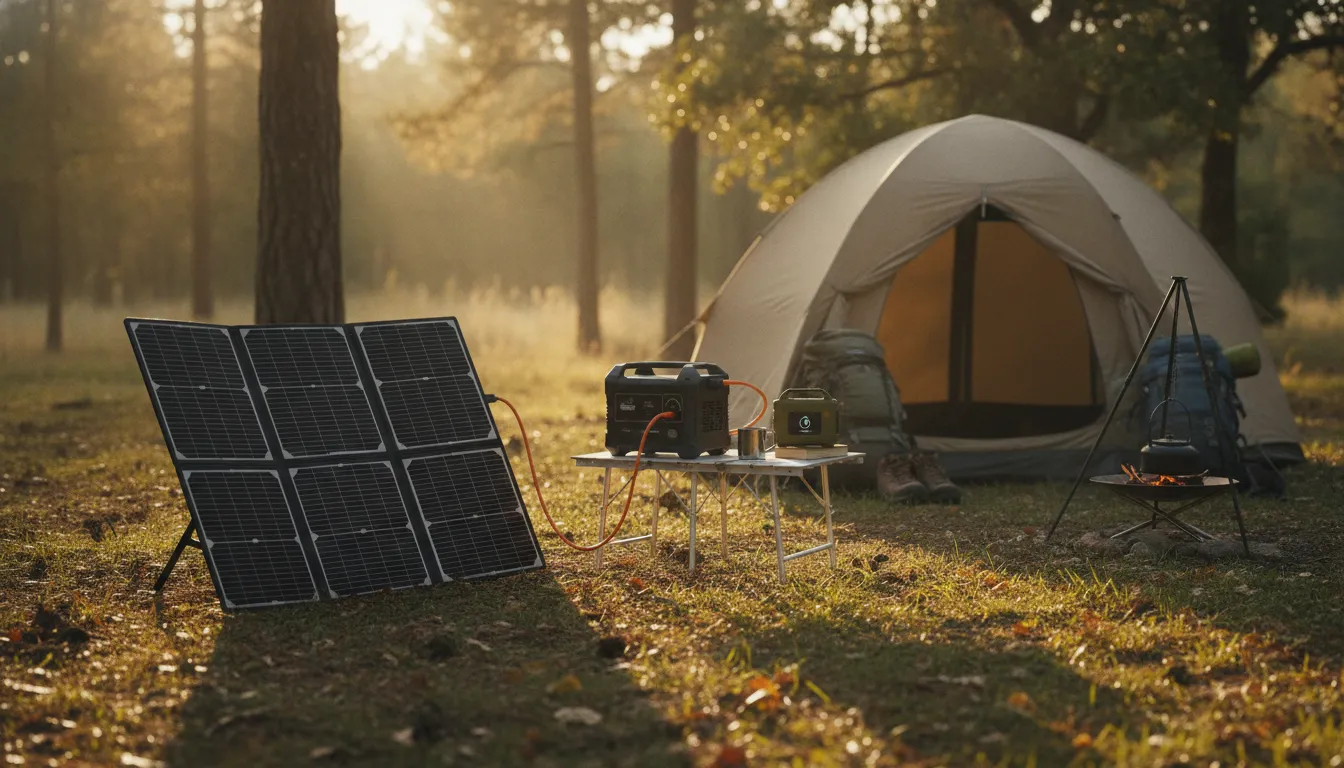
Long off-grid camping trips need a steady power plan. If you stay in the woods for more than a few days, your battery will run dry. Using only a wall charge limits your time in the wild. Adding solar panels creates a steady loop of clean energy. This setup keeps your devices running without a loud gas generator. It lets you stretch a smaller battery and stay off the grid for weeks.
Benefits of Solar Power for Camps
Solar power is the best way to extend your outdoor trips. Bright sunlight gives you a free and quiet charge source. Federal field crews also use portable power sources to charge key tools like GPS units and phones in remote woods. When you camp, a solar panel keeps your gear topped up. It protects your battery from running completely flat, which can hurt its lifespan. Keeping your unit charged makes sure you always have power for safety and comfort.
With a good setup, you do not need a massive battery. For example, a 200W solar panel can add 600Wh to 900Wh of energy on a sunny day. This clean power can run a small fridge or run campsite lights all night. By adding solar, a smaller portable power station for camping can do the work of a much larger unit. It reduces the weight you must carry to your site.
Matching Panels to Your Gear
To get the best results, you must match your panel size to your battery. Large stations need big panels, while small stations charge fast with compact gear. For example, the KEUTEK 300W Portable Power Station Max has a 256Wh battery capacity. It can fully recharge from a 100W solar panel in about four to five hours of direct sun. This quick charging cycle makes it easy to keep your phones, cameras, and lights ready to use.
When choosing your gear, look for durable and portable designs. High-quality panels use rugged cell structures to withstand tough weather. Portable options fold down to save cargo space in your car. You can check out the KEUTEK Solar Panels collection to find lightweight options designed for camp life. These panels connect easily to your station and fold flat when it is time to pack up.
See the fast charging portable power collection to pair your station with dependable recharging gear.
Frequently Asked Questions
How big of a portable power station do I need for camping?
For basic weekend camping trips that run phones, lights, and fans, a 500-watt-hour capacity is often enough. According to Camp Gear Rated, a 500 to 1000-watt-hour station is ideal for up to three nights without solar recharge. If you want to run larger camp gear like a portable fridge, you will need a much larger battery capacity.
Can a portable power station run a camping fridge?
Yes, but camping fridges draw a lot of power. To keep your food safe and avoid draining your battery, you should use a power station with at least 1000-watt-hours of capacity. On long off-grid trips, Camp Gear Rated recommends combining a large battery with a portable solar panel to keep the system running.
How do I make my camping power station more efficient?
You can save a lot of energy by plugging your 12V gear directly into the DC ports of your power station. Avoiding the AC inverter is very helpful. Research by Camp Gear Rated shows that using the AC inverter loses about 10 to 15 percent of your battery energy as heat.
Can I use solar panels to charge a power station while camping?
Yes, portable solar panels are a great way to recharge your power station off the grid. According to Camp Gear Rated, a 200W solar panel can generate about 600 to 900-watt-hours of energy on a sunny day. This solar charging method can stretch your battery life indefinitely, allowing you to run outdoor gear in remote areas.
Ready to Power Your Next Off-Grid Camping Adventure?
A dead phone or dark camp can ruin your weekend trip in an instant. If you wait until you are deep in the woods to plan, it is too late. Buying your mobile power station now keeps your lights, phone, and camp gear running from the moment you arrive.
Our rugged power gear comes with a lifetime warranty and helpful US support to keep you safe off the grid. You will always have clean, safe power for every device you choose to bring along with you. Our heavy duty design is built to last through cold nights, wind, and rough outdoor trips. Ready to book? Request your KEUTEK 300W Portable Power Station Max today to get a reliable portable power station for your next camping trip.
Get your KEUTEK 300W Portable Power Station Max today and stay powered on every off-grid trip.


Leave a comment