

Why a Braided USB-C Cable Lasts Longer

Most USB cables fail because thin plastic jackets cannot handle the constant bending of daily use. A braided USB-C cable adds a woven outer layer that resists abrasion, spreads flex stress, and helps protect the conductors inside.
Choose the KEUTEK Sovix 100W braided USB-C cable for simple, reliable everyday charging.
A braided USB-C cable lasts much longer than standard versions because of its tough nylon or fabric shell. This guard layer acts as a strong shield that takes the strain and stops the inner copper wires from snapping under pressure. Unlike smooth plastic that cracks when it gets cold or old, the woven shell stays flexible while stopping scrapes from desk edges or car seats. High-quality braided designs also feature tough neck joints that stop the cable from kinking at its most weak points. By choosing a cable with a thick weave, you protect your devices from shorts and ensure a steady fast-charging connection for years. This toughness makes the braided design the best choice for anyone who needs power while they work or travel.
Learning how this tough gear works helps you pick the best charging tools for your busy home or car. We will see exactly Why a braided USB-C cable resists everyday wear. The process of finding the right new cable begins with
Why a braided USB-C cable resists everyday wear
The braided jacket is the cable's first line of defense. Its woven fibers resist surface abrasion, distribute everyday bending across a wider area, and help shield the conductors from repeated handling. Connector construction and strain relief still matter, so durability depends on the whole cable rather than the braid alone.
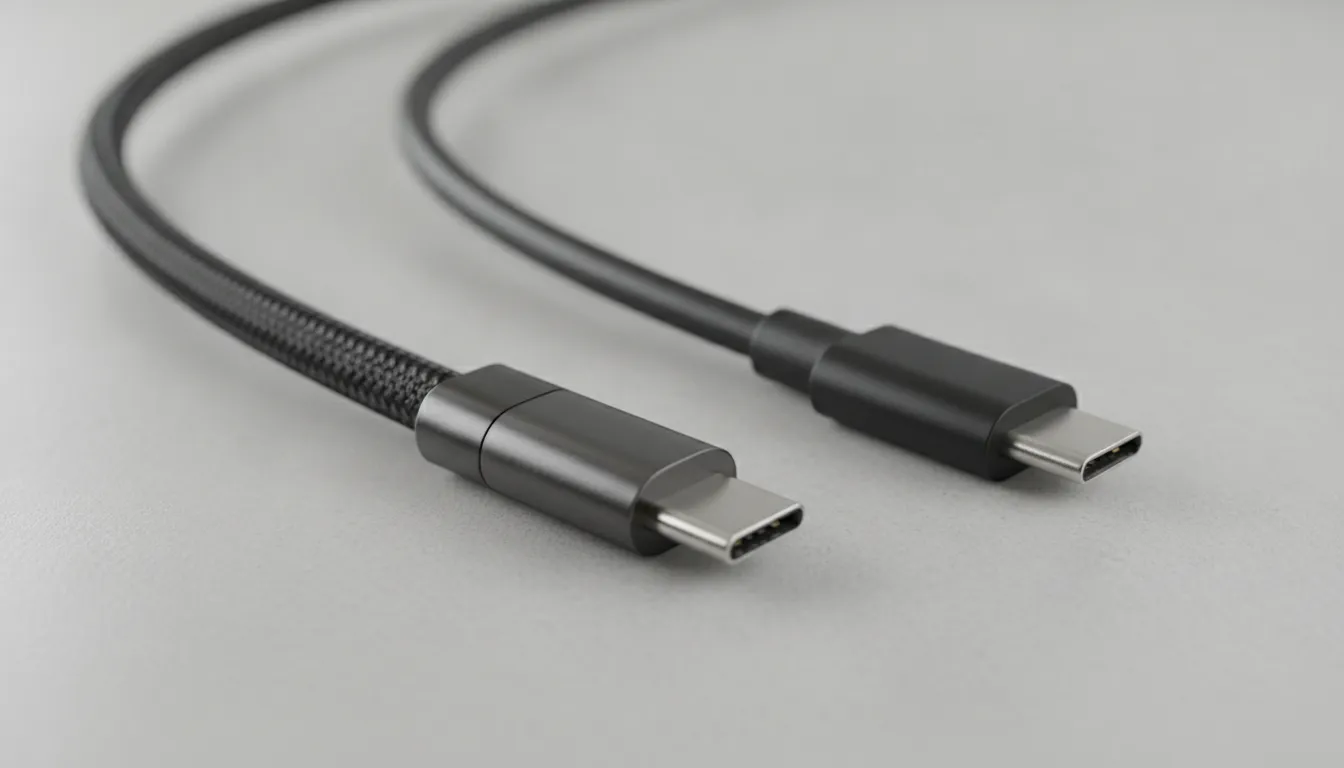
Armor against abrasion
The main job of a braided jacket is to stop surface wear. When you use your device, the cord often rubs against the edge of a desk or the floor. Over time, this rubbing can cut through a basic rubber sleeve. A braided design uses many small strands of nylon or other tough fibers. These strands are woven tight to create a smooth, hard surface. This layer makes it much harder for sharp objects to snag or tear the cable.
Because the cloth is so dense, it also keeps dirt and grit away from the inner parts. This is vital for people who use their tech in busy places like coffee shops. Keeping the core wires safe means your power flow stays steady. You will not have to deal with the slow speeds that come with a damaged wire. It is a simple way to make sure your gear works every time you plug it in.
Better flex and strain relief
Bending is the most common way a cable breaks. Most cords snap near the ends because they move too much in one spot. A braided USB-C cable spreads this stress across a larger area. The woven pattern lets the cord bend well without kinking. This keeps the copper inside from stretching or snapping. It allows for an easy move that matches how you use your phone or laptop.
This extra flex also helps with strain relief. When you pull on a cable, the braided layer takes most of the force. It stops the inner wires from taking the brunt of the tug. This feature is helpful for people who may have to charge in tight spots. By using the USB protocol standards for build grade, these cables offer a safer link for your costly devices. You can feel sure that your cord will handle the twists of a long trip.
A full strength system
While braiding is great, it is only one part of a strong cable. For the best results, the woven jacket must work with other top grade parts. This includes metal plug heads and thick inner shielding. A good cable uses these pieces together to create a full system of safety. Braiding makes the outside tough, but the inner design keeps the signal clear and the power high. It is the mix of these traits that shows a top product.
You should also look for tough joints where the cable meets the plug. These areas need the most help to resist wear. A top cable will have a long boot that blends into the braided sleeve. This design stops the most common break point from failing. When you use fast wall chargers with a sturdy cord, you are getting a setup built to last. You are getting a tool ready for many charge cycles without a hitch.
Braided vs. standard cable jackets
Braided and smooth cable jackets can both support reliable charging, but they respond differently to wear. A tight woven jacket generally offers better abrasion resistance and tangle control. A smooth thermoplastic jacket is often lighter and easier to wipe clean. The better choice depends on where and how you charge.
The strength of braided nylon
Braided cables use a woven nylon shell over the inner coating. This design adds a strong layer of safety against sharp edges and pets. The tight weave stops the cable from bending too much at the ends. This is why many high-end cords have a 30,000+ bend rating. The rough surface also makes the cable easy to grip when your hands are full.
These cables are built to survive at the bottom of a heavy bag. The nylon stops fraying and keeps the cord from tying into a knot. This strength is key for people who travel or use their gear in tough spots. It meets high standard rules for rugged gear. You can trust a braided jacket to stay whole even with heavy daily use.
Standard TPE jacket trade-offs
Standard cables often have a smooth jacket made of plastic or rubber. These skins are soft and easy to bend. They are often thinner than braided ones, which makes them easy to coil into small loops. If you mostly charge your phone on a desk, a standard cable is a light and simple choice. It does not catch on cloth or pick up lint.
But smooth jackets have some weak spots. They can crack or peel over time if they get too hot or cold. They are also more likely to kink, which can hurt the thin wires inside. Once the outer skin breaks, the cable is no longer safe to use. If you often pull your cord from a tight space, a standard jacket may not give enough cover.
Which jacket fits your life?
The best choice depends on how you treat your gear. If you are often on the move, the extra strength of nylon is worth the small cost. It stops the cord from catching on other items in your bag. For a home office where the cable stays still, a standard smooth jacket works well. Use the table below to compare the two styles.
| Feature | Braided Nylon | Standard TPE |
|---|---|---|
| Feel | Stiff and sturdy | Soft and bendable |
| Tangle Risk | Low | High |
| Scuff Defense | Great | Fair |
| Clean Up | Harder to wipe | Easy to clean |
| Bulk | Thicker feel | Thin and light |
| Life Span | Very long | Short to medium |
Most people who travel pick the braided style because it handles the stress of packing. A standard cable is often a bit cheaper but may need to be replaced soon. By picking the right jacket now, you save money and keep your gear safe. Whether you choose a rugged weave or a smooth skin, look for strong ends to ensure a stable charge.
What else determines how long a USB-C cable lasts?
A braided jacket protects the exterior, but cable life also depends on reinforced connector joints, effective strain relief, sound internal conductors, and proper power support. Any weak point can interrupt charging even when the braid looks intact. Evaluate the full construction and match the cable's rated power to your device and charger.
Connector build and metal joints
The metal ends that plug into your phone face a lot of stress. Good cords use a single piece of metal for the tip. This seamless design stops the end from bending or snapping off inside your device port. Cheap options often use two pieces stamped as one, which can split apart under heavy daily use.
Where the cord meets the plug is one more spot where breaks often happen. A long strain relief neck helps spread the force when you bend the wire. This rubber or plastic guard keeps the joint safe. When you pick a braided USB-C cable, a thick neck joint helps protect the core copper lines from fraying after months of travel.
Inner wires and shield thickness
What sits inside the jacket matters just as much as the outer cloth. A strong power cord needs thick copper wires to carry current without getting too hot. Thin lines can break down fast under heavy power loads. For safe charging, the cord must also have layers of metal shielding to stop signal noise from other home tech.
Strong inner parts help the cord give stable power for many years. Groups like the National Institute of Standards and Technology note that good parts protect circuits from voltage spikes. If the inner copper is too thin, the cord may fail to connect or slow down your charging speed. Buying a sound design keeps both your cord and your phone battery safe from harm.
Charging protocols and daily care
A cable must also match the power limits of your gear. If you use a cord that cannot handle high watts, the wire can get too hot and break down from the inside. High-power tools like laptops need a cord rated for their exact power draw. Pairing your cable with matching fast wall chargers makes sure that power flows smoothly without putting extra stress on the inner parts.
How you use your gear every day plays a major role in its lifespan. Pulling a cord out by the wire rather than the plug tip causes fast damage. Sharp folds or tight knots can snap the inner strands, even if the outer layer looks fine. Here is a list of choices that affect how long your gear lasts:
- The quality of the plug wall brick you use to get power.
- How often you expose the metal tips to dirt or moisture.
- The amount of tension placed on the wire while charging.
By stopping these bad habits, you can extend the life of your tech. Safe handling makes sure your cords stay ready when you need them.
How to make a braided USB-C cable last longer
Care habits matter even with a durable braided USB-C cable. Unplug it by the connector, coil it loosely, keep the ports clean, and avoid tight bends near either plug. These habits reduce concentrated stress at the cable's weakest points and help preserve a stable charging connection.
Protect the connector points
The most common spot for a cable to fail is near the plug. When you unplug your phone, always pull from the hard connector head. Never yank on the braided cord itself. Stressing the fabric where it meets the plastic can lead to fraying or internal breaks over time. Keeping this area straight while charging also helps prevent metal fatigue in the internal wiring.
Clean and store your gear
Dust and lint in the charging port or on the cable tips can slow down your power flow. Use a soft brush to keep the metal ends clean. When you are on the go, avoid stuffing your cable into a tight pocket or bag. Instead, coil it loosely in a circle to keep the inner wires from kinking. High heat or water can also damage the electronics, so keep your tech in a dry, cool place.
- Unplug by the head: Grasp the hard plastic or metal part of the plug to remove it from your device.
- Coil it loosely: Wrap the cable in a wide circle rather than folding it in sharp angles.
- Keep ports clean: Check the cable ends for dirt and use compressed air or a soft toothpick to clear debris.
- Avoid tight bends: Do not use your phone while the cable is bent at a 90-degree angle against a surface.
- Store in a case: Use a small pouch to protect the braided exterior from snagging on other items in your bag.
Matching your cable to your device is also key for safety. Using a durable USB cable that handles the right wattage ensures your battery stays healthy. High-quality cables often follow safety rules set by groups like the National Institute of Standards and Technology to ensure reliable power delivery. By checking your cable for signs of wear each week, you can spot small issues before they become big problems.
How do you choose a durable braided USB-C cable?
Choose a durable braided USB-C cable by checking its connector type, supported power, length, strain relief, and jacket construction. For shoppers who want a premium fixed-tip USB-C-to-USB-C design without extra pieces, the KEUTEK Sovix 100W fast charging cable pairs a braided exterior with reinforced aluminum connectors.
Match the cable to your gear needs
The first step in picking a cord is to check your gear. Most new phones and laptops now use a USB-C port for power. But not all cords are made to handle the same power level. Some are built for slow tasks, but others can move a lot of power at once. If you have a laptop or a pro phone, you need a cord that can handle at least 60W or 100W. The Sovix 100W cord is a top pick because it works with many types of gear.
Fixed-tip cables like the Sovix are a great choice if you want something plain and strong. They do not have extra pieces that can get lost or break off. This makes them more sturdy for people who are always on the move. While magnetic tips are fun, a fixed-tip cord gives you a direct link that stays in place. It is the best way to make sure you get a steady flow of power to your gear every time.
Using a weak cord with a strong plug can lead to slow charging. You want a cord that can keep up with your fast wall chargers for the best ends. This makes sure you spend less time tied to a wall plug. It also stops your cord from getting too hot during a fast charge. A good cable follows the rules set by the USB protocol to make sure the link is safe. By picking a cord that matches your gear's top speed, you get the most out of your tech.
Look for strong joints and tough plugs
The spot where the cord meets the plug is a usual fail point. When you pull or bend a cord, this joint takes most of the stress. This is why a strong strain relief boot is so vital. A top cable uses a long, flexy joint to stop the wires from snapping inside. The Sovix cable uses tough ends that can handle thousands of bends without a hitch. This design makes it a much better choice than a cheap plastic cord.
When you check a new cord, look for these three things:
- A long and flexy strain relief boot at each end.
- A plug head made of hard metal like aluminum.
- A tight nylon weave that does not have loose threads.
You should also look at what the plug head is made of. Hard metal shells like aluminum are better than plastic as they do not crack. They also help to pull heat away from the port while you charge. This keeps the power flow steady and safe for your gear. A tight braided layer on the outside adds another layer of defense. It stops the cord from fraying when it rubs against the edge of a desk or a floor. This build grade is what sets a top cord apart from a budget one.
Think about the length and use case
Before you buy, think about where you will use your new cord. A short three-foot cord is often best for a car or a desk. It stays out of the way and is easy to pack in a small bag. But if you want to use your phone while sitting on a couch, you may need a six-foot cord. The Sovix 100W cable gives you extra reach without losing any charging speed. This makes it a great tool for both home and travel.
Length can sometimes slow down how fast a cord charges if the wires are thin. But a top braided cord uses thick copper to keep the signal and power strong. This is very vital if you use fast charging power on the go. You want a cord that can reach your power bank but still charge at top speed. Picking the right length will help you keep your space clean and your gear ready to go. A plain, fixed-tip design like the Sovix makes it easy to use every day without any fuss.
When should you replace a braided USB-C cable?
Replace a braided USB-C cable when its plug is bent or loose, its jacket exposes inner material, charging repeatedly disconnects, or the connector becomes unusually hot. Stop using a visibly damaged cable rather than trying to patch it. A quick inspection before charging can reveal problems early.
Look for surface wear and fraying
The first sign of trouble is on the outside. If the fabric braid starts to pull apart, the cable is getting weak. This happens near the ends where the cord bends. If you see metal wires through the braid, stop using it. Exposed wires can spark and start a fire. The U.S. Consumer Product Safety Commission warns that old or bad cords are a top fire risk.
Fraying also makes the cord feel limp. A weak cable can cause the power signal to drop. This is a big deal if you need to move data or charge a laptop. It is better to get a new cord than to risk a short. Replacing a damaged cable is a practical way to protect your phone and charging port.
Watch for loose or bent plugs
The metal plug can get bent if you drop your device while it is plugged in. Check the tip to see if it looks straight. If the plug looks tilted, it may not fit the port right. A bad fit can break the port on your phone. This fix costs much more than a new cable. You should also feel for a firm click when you plug it in.
The cord should stay in place and not wiggle. If it falls out or you have to hold it at an angle, the pins are worn out. This loose fit causes heat to build up because power cannot flow well. If the plastic near the plug feels hot, unplug it. Heat is a sign that the metal parts are failing.
Check for slow or broken charging
Damage can also hide inside where you cannot see it. If your phone takes too long to charge, the cord might be bad. Fast charging needs a clear path for power. A broken wire inside the braid will slow this down. You might also see your screen flash as charging starts and stops. This is hard on your battery and can shorten its life.
Try the cord with a new power brick to see if the issue stays. If it does, the cable has reached its end. High-speed charging tech needs the cord to talk to the plug. When that link is weak, speeds will drop for safety. A new cable will fix your fast charging and keep your gear running well.
Frequently Asked Questions
Do braided USB-C cables charge devices faster?
The outer braid does not change how fast a device charges. Charging speed depends on the inner wires and the power source. But a tough braided shell keeps those inner wires from breaking. If the wires stay healthy, your cable can keep its full speed for much longer than a thin plastic cord.
Are braided cables better than plastic ones?
Braided cables are often better than plastic ones for most users. The woven nylon jacket is much tougher and resists cuts or scrapes. Plastic cables often crack when they get old or cold. A braided cord stays easy to bend and can handle thousands of twists without failing. This makes it a great choice for travel or daily use in your car.
Is a braided USB-C cable worth the higher cost?
A well-built braided USB-C cable can be worth the cost for people who travel often or put charging gear through heavy daily use. The braided jacket helps resist abrasion, but overall value still depends on the connector build, strain relief, supported power, and how you care for the cable.
Do braided cables fray over time?
Even the best braided cables can show some wear if they rub against sharp edges. Most high-quality cords use tight nylon weaves to stop this from taking place. To stop fraying, keep your cable away from Velcro or rough metal spots. If you see a small snag, do not pull it. Using a cord with a thick, dense braid will help it stay smooth for years.
Ready to get a strong braided cable that really lasts?
Cheap cords break often and cause slow speeds or real damage to the charging ports on your phone or your laptop. Request a strong cable today to save yourself from the stress of a dead battery and stop the high cost of buying new chargers. A tough cable gives you the peace of mind that your devices will always be ready to work when you need them most during the day.
Ready to get the best power? Contact KEUTEK to shop the Sovix 100W USB-C cable today. You will get fast and safe charging that will last for a very long time to come and keep all your gear safe and ready.


Leave a comment