

Solar Phone Charger Buying Guide for Travel and Emergencies

A reliable solar phone charger turns daylight into a practical backup for navigation, weather alerts, calls, and essential travel electronics when an outlet is unavailable. The right setup is not simply the panel with the largest number on its label. It matches usable panel wattage, battery capacity, ports, weight, and weather resilience to the way you travel or prepare for an outage.
Explore KEUTEK fast-charging portable power for your travel or emergency kit.
What Is a Solar Phone Charger, and When Is It Useful?
A solar charger uses photovoltaic cells to convert sunlight into electrical power. A portable panel sends that power through an output port, while a solar power bank stores energy in an internal battery. Both can support a phone, but they solve different problems. A panel is an energy source only when enough light reaches it. A power bank is stored energy that works at night, indoors, or during poor weather.
This distinction matters because phones prefer a stable input. Passing clouds, tree shadows, and a changing sun angle can cause a panel's output to rise and fall. Directly charging a phone from a panel can work under steady sunlight, but charging a power bank first usually creates a more dependable buffer. The bank can collect variable solar input during the day and deliver stable power to the phone later.
Where solar charging earns a place
Solar charging is most valuable when a trip or outage lasts longer than the energy already stored in your batteries. It can support a multi-day campsite, a road-trip backup, an off-grid workday, or an emergency kit during an extended grid interruption. It is less useful as a substitute for wall charging before departure. Start with every battery full, then use solar to replenish what you consume.
KEUTEK offers portable power options for travelers who want storage and solar replenishment in one plan. A portable solar power bank suits a compact backup kit, while a larger foldable panel provides more collection area for a fixed campsite or prolonged emergency setup.
Set realistic expectations for sunlight
Panel wattage is a rated maximum under favorable test conditions, not a promise of continuous field output. Real production changes with cloud cover, season, latitude, panel angle, temperature, dirt, and partial shade. A panel rated at 40 watts may produce substantially less when the sun is low or one section is shaded. Plan around daily energy needs and variable conditions instead of assuming the rated wattage will be available all day.
Small cells built into a power bank have limited surface area. They are useful for gradual replenishment and resilience, but they should not be treated like a larger folding panel. For an emergency, pre-charge the bank from a wall outlet and use its solar surface as a secondary input.
How Do You Choose the Right Solar Phone Charger?
Begin with the devices you must keep operational and the length of time between reliable outlets. A phone used for occasional messages needs less energy than one running GPS, recording video, or serving as a hotspot. Add lights, a watch, or a second phone, and both storage and panel requirements rise. The best choice leaves a reasonable energy margin without adding unnecessary bulk.
Compare panel wattage and usable output
Wattage indicates a panel's potential power output. More wattage generally means more collection area and faster replenishment in equivalent sunlight, but the connected device and charging controller also limit the result. A phone will draw only the power supported by its charging system. Extra panel capacity is still useful because it can compensate for imperfect conditions or supply a power bank while sunlight is available.
For a short outing, a compact solar bank may provide enough redundancy. For a base camp or multi-day outage, a KEUTEK 40W portable solar panel gives you more surface area to capture sunlight and replenish compatible storage. Before buying any panel, confirm its output connectors, voltage, and supported charging standards match the battery or devices you intend to use.
Size power bank capacity for the trip
Power bank capacity is commonly listed in milliamp-hours, but that figure alone does not equal the energy delivered to a phone. The bank's internal cell voltage, conversion losses, cable losses, phone battery size, and device use during charging all affect the final result. Treat advertised capacity as a comparison point, then build in a reserve for real-world use.
A practical estimate starts with your phone's battery capacity and the number of expected recharges. Add energy for other devices and a margin for losses and cloudy periods. If weight matters, carry enough storage for essential communication and navigation rather than every convenience. If the kit stays in a car or home, a larger reserve may be worth the added size.
Check USB-C ports, cables, and charging protocols
USB-C describes the connector, not a guaranteed charging speed. Check the input and output specifications for the panel, power bank, phone, and cable. Fast charging requires compatible devices to negotiate a supported protocol and power level. If one component is limited, the whole connection operates at that lower limit.
Pack a short, dependable cable to reduce clutter and connection failures. KEUTEK's ProSeries Max fast-charging cable is an option for a travel kit. Also carry the correct connector for every essential device, and test each cable with the intended bank before departure.
Evaluate construction and packability
Outdoor equipment should tolerate routine packing, vibration, and exposure to dust, but protection varies by model. Review the manufacturer's water and dust rating, operating temperature guidance, port covers, hinge construction, and folded dimensions. Water resistance does not mean a panel or battery can be left in heavy rain or submerged. Keep connectors dry and store batteries in a protected bag when conditions deteriorate.
| Setup | Solar collection | Energy storage | Best fit | Main trade-off |
|---|---|---|---|---|
| Solar power bank | Small integrated panel | Built in | Short trips and compact emergency kits | Slow solar replenishment |
| Foldable 40W panel | Larger folding surface | Requires separate bank | Base camps and longer outages | Needs setup space and steady light |
| Panel plus power bank | Selected for daily energy demand | Separate, sized for overnight use | Multi-day travel and emergency resilience | More components and weight |
Compare KEUTEK portable power options before building your charging kit.
Solar Panel or Solar Power Bank: Which Setup Fits Your Trip?
A solar power bank is the simplest all-in-one choice. Charge it fully before leaving, use its stored energy whenever needed, and place it in sunlight for supplemental replenishment. It fits day hikes, flights, roadside kits, and short outages where portability matters more than fast solar collection.
A folding panel is better when you expect to remain away from outlets and can stop long enough to deploy it. Its larger surface area can capture more energy, but it does not store that energy by itself. Pair it with a compatible power bank so changing light does not repeatedly interrupt phone charging.
Match the setup to your movement
- Day hike: Start with a full power bank. Treat its solar input as backup rather than the primary charging plan.
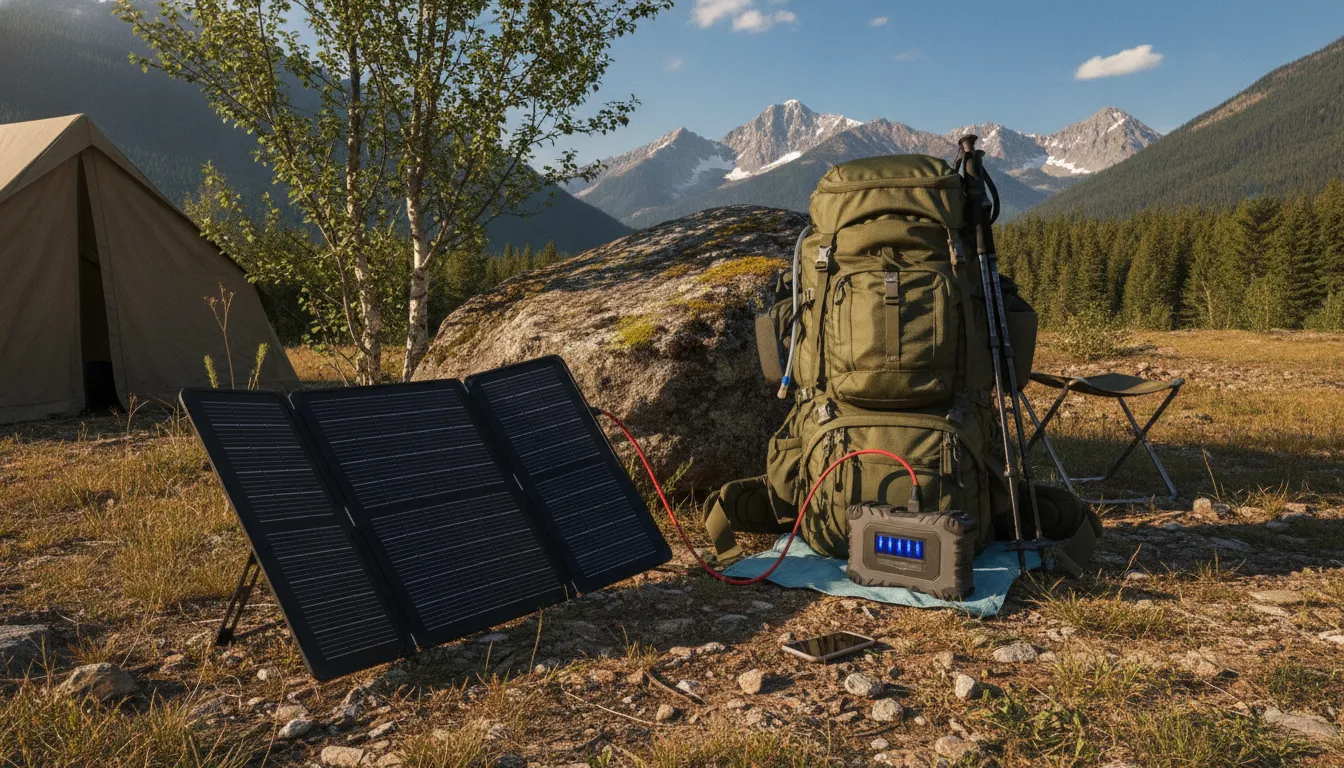
- Fixed campsite: Deploy a foldable panel in open sunlight and connect it to a bank during the day.
- Road trip: Use vehicle or wall charging when available, then reserve solar for locations without dependable power.
- Emergency kit: Store a charged bank, folding panel, tested cables, and a simple energy-use plan together.
For the greatest resilience, combine storage with a panel sized to replace a meaningful part of your daily use. During daylight, replenish the bank. At night or during bad weather, use stored energy for the phone. This separates energy collection from device charging and makes the system easier to manage.
How Can You Get Better Solar Charging Performance?
Good placement and energy management matter as much as equipment specifications. Solar cells need direct light, while batteries and phones benefit from cooler conditions. Arrange the system so the panel faces the sun but the connected electronics remain shaded and ventilated.
Position the panel, then reposition it
Open the panel fully and aim its face toward the sun. Avoid shadows from branches, tent poles, guy lines, and nearby equipment. Partial shade can sharply reduce output, even when most of the panel still appears bright. As the sun moves, inspect the setup and adjust the panel angle. Keep the cell surface clean using the care method recommended by the manufacturer.
Do not assume a single fixed angle is optimal everywhere. Latitude, season, time of day, and terrain change the useful angle. A simple approach is to orient the panel so sunlight strikes it as directly as practical, then check the input reading on a compatible bank if one is available.
Keep phones and batteries out of direct sun
Solar panels can become hot during operation, and direct sun can push a phone or power bank beyond a comfortable charging temperature. Heat may slow or pause charging as the device protects its battery. Run the cable from the panel to a shaded, ventilated location, and never place a phone beneath material that traps heat. Follow the device manufacturer's temperature limits.
Charge storage first and control demand
Connect the panel to a power bank during periods of strong sun, then charge the phone from the bank when convenient. This approach smooths variable solar output and lets the phone stay protected. Prioritize essential uses by lowering screen brightness, downloading maps before departure, limiting background activity, and using airplane mode when connectivity is not needed.
- Start every trip with the phone and power bank fully charged.
- Deploy the panel in an open area with direct sunlight.
- Place the connected bank in shade with airflow.
- Check cables, connectors, panel angle, and shadows periodically.
- Use stored energy for essential devices after sunset or during poor weather.
Build and Maintain an Emergency Charging Kit
An emergency charging kit should work without improvisation. Store the panel or solar bank with the cables and adapters required by your household's essential devices. Include a standard wall charger and car charger when available, because solar should be one part of a redundant charging plan rather than the only option.
Pack for the likely emergency
For a short outage, charged banks may cover essential phone use without solar deployment. For a prolonged interruption, a folding panel can replenish those banks during suitable daylight. Decide which devices receive priority, such as one communication phone, a small light, or a weather radio that accepts USB power. Write down the plan so anyone in the household can use the kit.
Keep batteries away from extreme heat and moisture. A car may be a convenient storage location, but cabin temperatures can become unsuitable for lithium batteries. Follow product storage guidance and move the kit when necessary.
Test the complete charging chain
Every few months, connect the exact panel, bank, cable, and phone you expect to use. Confirm that ports fit securely and that each bank accepts and delivers power. Inspect cables for damage and check the battery case for swelling, cracks, or other warning signs. Stop using damaged batteries and follow local rules for safe disposal.
Recharge stored banks on a schedule appropriate for their instructions. Keep an inventory card with the last test date and required connectors. Maintenance is simple, but it prevents discovering a failed cable or depleted bank during an outage.
Common Solar Charging Mistakes
- Depending on an empty solar bank: A small integrated panel may replenish slowly. Charge the bank before leaving home.
- Planning from rated wattage alone: Real solar output changes throughout the day. Include time and capacity margins.
- Charging a phone in direct sunlight: Keep the phone and bank shaded to reduce heat-related charging interruptions.
- Ignoring connector compatibility: USB-C shape alone does not confirm power compatibility or fast charging.
- Skipping a pre-trip test: Test the entire system together, including every cable and adapter.
- Letting one shadow cross the panel: Move the panel away from trees and campsite equipment, then adjust it as the sun moves.
Frequently Asked Questions
Can a solar phone charger charge a phone directly?
Yes, a compatible solar panel can charge a phone directly when sunlight is strong and stable. A power bank between the panel and phone is often more reliable because it buffers changes caused by clouds, shadows, and panel angle.
How much panel wattage do I need for phone charging?
The right wattage depends on the phone, available sunlight, and whether you are charging a power bank at the same time. Higher panel wattage provides more margin in imperfect conditions, but the connected device and controller determine how much power is actually accepted.
Should I charge my phone or a power bank first?
Charge a power bank first when solar conditions may vary. The bank can collect energy throughout the day and provide stable power to your phone later, while the phone stays shaded and available for use.
Does a solar phone charger work on cloudy days?
A solar phone charger can produce some power under clouds, but output may be much lower and less consistent than in direct sunlight. Carry charged storage and plan for extra replenishment time rather than relying on cloudy-day solar output alone.
Choose a Solar Charging Setup You Can Depend On
The strongest travel or emergency system combines charged storage, a panel suited to the trip, compatible USB-C equipment, and a tested routine for sunlight and heat. Choose enough capacity for essential devices, allow for variable solar output, and keep phones and batteries shaded while the panel works.
Shop KEUTEK fast-charging portable power and build a solar-ready backup kit.


Leave a comment