

Power Bank on Airplane: TSA Rules and Travel Tips

A power bank can keep your phone, tablet, or travel gear running when outlets are scarce, but packing it correctly matters before you reach the airport. The key checks are simple: confirm the watt-hour rating, keep the label readable. Protect the terminals, and place a standalone lithium battery in your carry-on rather than checked luggage.
For a power bank on airplane trip, pack it in your carry-on, not checked baggage, and verify its watt-hour rating and condition before departure. TSA lists power banks as permitted in carry-on bags and prohibited in checked bags, while FAA guidance and the operating airline may add capacity, quantity, or handling requirements. Read the TSA guidance.
That baseline separates airport screening from the more detailed battery rules that govern capacity and safe transport. Start by confirming where the power bank belongs and what checkpoint officials can require, then use the label and airline policy to refine your packing plan.
Can You Bring a Power Bank on an Airplane?
Yes, but pack a standalone power bank in your carry-on bag, never in checked baggage. The Transportation Security Administration lists power banks as permitted in carry-on bags and not permitted in checked bags. The Federal Aviation Administration gives the same carry-on-only direction for spare, uninstalled lithium-ion batteries, including external battery chargers and power banks.
See KEUTEK's documented 99Wh portable solar power bank for a travel-ready option.
This is the practical baseline for a power bank on an airplane, but it is not the whole decision. Airport security screening and aviation dangerous-goods rules are related, yet they are separate systems. TSA guidance addresses what may pass through the security checkpoint. FAA guidance addresses battery safety and carriage on passenger aircraft. Check both when a battery has an unusual capacity, condition, or design.
What happens at the security checkpoint?
A TSA officer has the final decision on whether an item is allowed through the checkpoint. That means a listing or product description should not be treated as a guarantee of entry. Keep the power bank accessible enough to present if an officer asks to inspect it. And avoid packing it where its capacity marking or safety condition cannot be checked.
The battery should also be in suitable condition before you leave for the airport. FAA guidance says damaged or recalled batteries that are likely to create sparks or generate dangerous heat must not be carried aboard an aircraft unless they have been made safe. A swollen case, visible damage, unusual heat, or signs of leakage are reasons to leave the power bank at home, not reasons to hide it in checked luggage.
What if your carry-on is checked at the gate?
A gate check does not change the rule. If an airline takes your carry-on at the gate or planeside, remove the power bank and keep it with you in the aircraft cabin. The FAA specifically directs passengers to remove spare lithium batteries and power banks before the bag goes into the aircraft hold. Protect the terminals from short circuit during the trip, then follow the operating airline's current instructions for any additional quantity or capacity limits.
For the exact capacity thresholds and approval requirements, read the watt-hour rating printed on the device and confirm the next section's guidance before flying.
What Watt-Hour Limit Applies to a Power Bank on Airplane Trips?
Air-travel limits are based on watt-hours (Wh), not just the milliamp-hour number printed on a power bank. Under FAA guidance, rechargeable batteries from 0 to 100 Wh are allowed on passenger aircraft, while batteries from 101 to 160 Wh require approval from the air carrier. Batteries above 160 Wh are forbidden on passenger aircraft. These are general FAA thresholds, not a guarantee that every airline will apply the same quantity or approval process.
To estimate watt-hours when a label lists only capacity in mAh, use this calculation:
Wh = mAh x nominal volts / 1000
This is an estimate because battery voltage varies. The nominal voltage used by the manufacturer may differ from the voltage assumed by a simple conversion. The watt-hour rating printed on the product or its documentation is the better figure to use for travel planning. For example, a 20,000 mAh power bank calculated at a nominal 3.7 volts is approximately 74 Wh: 20,000 x 3.7 / 1,000 = 74.
| Battery rating | General FAA treatment | What to do before flying |
|---|---|---|
| 0 to 100 Wh | Rechargeable batteries in this range are allowed on passenger aircraft under general FAA guidance. | Keep the power bank in your carry-on and confirm that the operating airline has no stricter rule. |
| 101 to 160 Wh | Rechargeable batteries in this range require approval from the air carrier. | Contact the operating airline before the trip and obtain approval rather than relying only on the printed rating. |
| Above 160 Wh | Rechargeable batteries above this threshold are forbidden on passenger aircraft. | Do not pack the power bank for a passenger flight, even if it fits in a carry-on bag. |
The practical decision point is usually whether the power bank is at or below 100 Wh. FAA guidance identifies 100 Wh as the standard limit per rechargeable lithium-ion battery. Larger spare batteries from 101 to 160 Wh may be carried only with airline approval and within applicable quantity rules. Airlines can impose stricter watt-hour or quantity limits, so check the operating carrier before departure, especially when a codeshare or connecting airline is involved.
For a broader explanation of capacity, ports, and travel-ready features, review KEUTEK's power bank charger buying guide. Use the guide to compare products, then use the rating on the specific power bank and the current airline policy to make the final packing decision.
Sources: FAA passenger battery guidance and FAA lithium battery guidance.
Related products

How Should You Pack and Protect the Battery?
Safe packing is mostly about preventing damage, short circuits, and surprises at the gate. A power bank should be easy to identify, protected from loose metal objects, and available to you throughout the trip. Use this sequence before leaving for the airport:
- Inspect its condition. Do not pack a power bank that is swollen, cracked, leaking, unusually hot, recalled, or otherwise damaged. The FAA says damaged or recalled batteries that could spark or produce dangerous heat must not be carried unless they have been made safe. If the status is uncertain, leave it out and check the FAA's PackSafe guidance.
- Protect the terminals. Keep the power bank in its original protective pouch, a dedicated case, or a separate pocket. Make sure its ports and contacts cannot touch keys, coins, loose cables, or other conductive metal. FAA guidance requires battery terminals to be protected from short circuit. Do not let a cable remain connected where it could activate or damage the unit.
- Keep it accessible in your carry-on. Spare lithium-ion batteries, including power banks, must travel in carry-on baggage rather than checked baggage. Place yours where you can remove it for inspection and where you can notice heat, odor, smoke, or other changes. Keep the capacity marking visible when practical, especially if your airline asks to verify it.
- Plan for a gate check. If an airline takes your carry-on at the gate or planeside, remove every power bank before handing over the bag. FAA guidance says spare batteries and power banks must remain with the passenger in the aircraft cabin. Put the unit in your personal item instead, not in the bag entering the aircraft hold.
- Know the warning signs. Lithium-ion batteries can undergo thermal runaway, sometimes after damage, overheating, water exposure, overcharging, improper packing, or a manufacturing defect. If the power bank becomes unusually hot, expands, smokes, or burns, do not handle it more than necessary. Notify the flight crew immediately. FAA guidance notes that crews are trained to respond to lithium battery fires in the cabin.
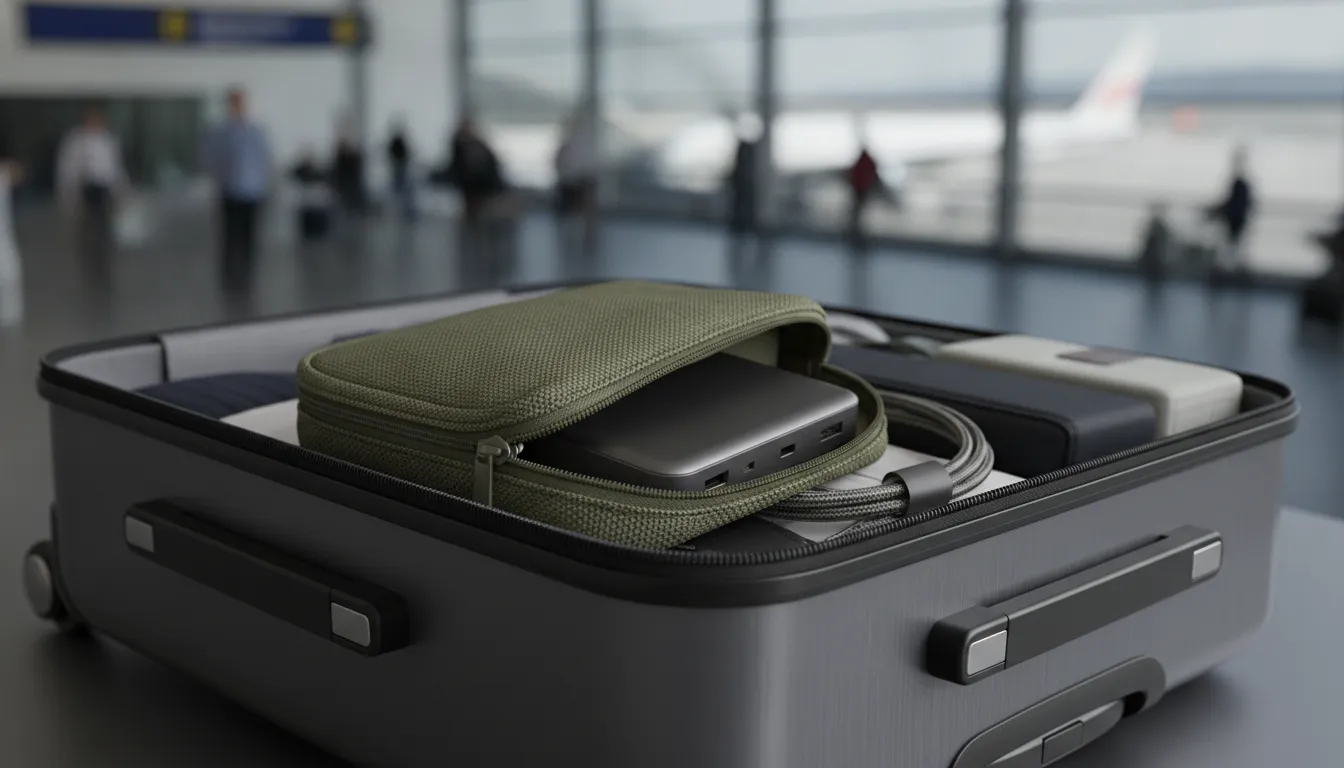
Once onboard, follow the operating airline's instructions about using or charging a power bank. Do not hide a problem in a seat pocket or overhead bag. Tell a crew member promptly so the situation can be assessed and managed with the aircraft's safety procedures. The FAA's lithium battery guidance explains the underlying precautions, while the airline controls additional onboard requirements.
What Should You Check With Your Airline Before Flying?
General FAA and TSA guidance gives you a starting point, but the operating airline can apply stricter rules. Before packing a power bank on airplane trips, open the baggage or dangerous-goods page for every carrier on your itinerary. Check it close to departure because airline policies can change, and treat the operating carrier's current instructions as the controlling practical standard for your trip.
Which quantity and watt-hour limits apply?
Confirm both the maximum number of power banks and the capacity allowed for each unit. FAA guidance allows rechargeable batteries rated from 0 to 100 Wh on passenger aircraft, while batteries from 101 to 160 Wh require air-carrier approval. Batteries above 160 Wh are forbidden on passenger aircraft. Airlines may set stricter quantity or Wh limits than those general thresholds, so do not assume that a policy allowing one unit automatically allows two. If approval is required, obtain it before arriving at the airport and keep the confirmation accessible.
Can the airline read the label and control use onboard?
Make sure the capacity marking is visible and readable. A label hidden under a case, worn away, or expressed only in mAh can slow an inspection when staff need to verify the rating. Keep the unit in your cabin baggage, protect its terminals, and ask whether the carrier permits using or charging power banks during the flight. Some airlines restrict one or both activities, even when the battery is otherwise permitted. Follow the cabin crew's instructions if they are more restrictive than the published policy.
What changes on codeshares and international connections?
Review every flight segment, not only the airline that sold the ticket. A codeshare may be operated by a different carrier with different quantity, labeling, storage, or onboard-use rules. Connecting airlines can apply their own requirements at the next departure, while international routes may also involve destination-country aviation or airport authorities. Verify the current rules with each operating airline and allow time to resolve an approval question before travel.
For a broader packing and capacity overview, see this portable power for travel guide. The safest checklist is simple: confirm the carrier, capacity, quantity, label, and onboard-use rules before you leave home.
Is a 99Wh Power Bank a Practical Travel Size?
For many travelers. A documented 99Wh power bank can be a practical balance between usable capacity and the common FAA watt-hour tier for a power bank on airplane trips. FAA guidance says rechargeable batteries rated from 0 to 100Wh are allowed on passenger aircraft, while batteries from 101 to 160Wh require air-carrier approval. Batteries above 160Wh are forbidden on passenger aircraft. See the FAA battery guidance for the current framework.
That makes 99Wh a meaningful specification, not a promise of universal acceptance. The number should be printed or documented clearly on the product, and the label needs to remain readable during screening. A model that lists both 26,800mAh and 99Wh gives travelers more useful information than one that only advertises mAh. Keep the product documentation available, especially if the label is small, worn, or difficult to read.
As a product-specific example, the KEUTEK 99Wh portable solar power bank is documented at 26,800mAh and 99Wh. That documentation supports a straightforward capacity check, but it does not constitute airline approval. Pack it in your carry-on, protect exposed terminals from short circuits, and inspect it for damage before leaving. If your carry-on is taken at the gate, remove the power bank and keep it with you in the cabin.
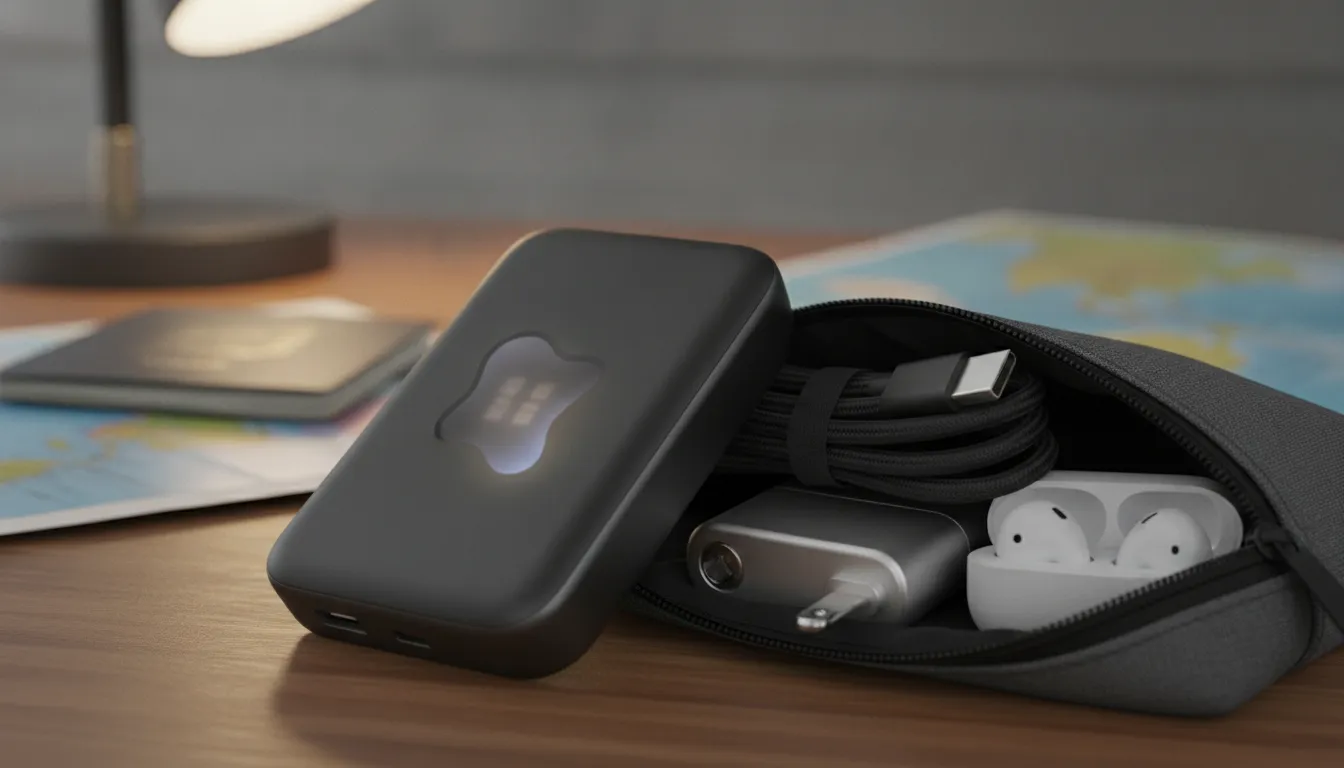
Airlines can set stricter limits on quantity, labeling, use, or charging. International routes, codeshares, connecting airlines, and destination authorities may add requirements. Check the operating airline for every flight rather than treating the 0 to 100Wh tier as automatic clearance. Some carriers may also restrict using or charging a power bank during the flight.
For a broader look at selecting capacity, ports, and everyday charging needs, review KEUTEK's phone power bank buying guide. Then confirm the exact model's Wh marking and documentation against your itinerary. The practical question is not simply whether 99Wh fits a common threshold. It is whether the product is clearly labeled, safely packed, and accepted under the rules of the airline operating your trip.
What Is the Airport-Day Checklist?
Before leaving for the airport, run through this short checklist for a power bank on airplane travel. It is designed to catch the details that can create delays at screening or boarding, while keeping the battery accessible if your bag changes plans at the gate.
- Confirm the watt-hour label is readable. Make sure the power bank's Wh rating can be seen without guessing or relying only on a mAh number. Under FAA guidance, rechargeable batteries from 0 to 100 Wh are allowed on passenger aircraft, while 101 to 160 Wh requires air-carrier approval. Batteries above 160 Wh are forbidden on passenger aircraft. Review the FAA passenger battery guidance if the rating is unclear.
- Check its personal-use condition. Do not pack a power bank that is damaged, recalled, swollen, unusually hot, or likely to spark or generate dangerous heat. FAA guidance says damaged or recalled batteries must not be carried unless they have been made safe.
- Protect the terminals. Prevent exposed contacts from touching metal objects or other battery terminals. Keep the power bank in a protective pouch or a separate compartment so the terminals are protected from short circuit, as recommended by the FAA.
- Place it in your carry-on. Standalone power banks are spare lithium batteries, so they must remain in carry-on baggage rather than checked luggage. Keep the bag easy to open if a security officer needs to inspect the battery. TSA lists power banks as allowed in carry-on bags and not allowed in checked bags, but the TSA officer has final authority at the checkpoint.
- Verify the operating airline. Check the current policy for every operating carrier on the itinerary, including connecting or codeshare flights. Airlines may impose stricter quantity or Wh limits than general FAA guidance, and some routes or carriers may set additional rules.
- Remove it before a gate check. If an agent checks your carry-on at the gate or planeside, take the power bank out first and keep it with you in the cabin. FAA guidance specifically requires spare power banks to remain with the passenger.
- Know the onboard response. If the battery overheats, expands, smokes, or burns, notify the flight crew immediately. Do not continue using or charging it while waiting for assistance. Flight crews are trained to respond to lithium battery fires in the cabin.
Frequently Asked Questions
What size of power bank can I take on a plane?
Under FAA guidance, a rechargeable battery from 0 to 100 watt-hours (Wh) is generally allowed on a passenger aircraft in your carry-on. A battery rated from 101 to 160 Wh requires air-carrier approval, while batteries above 160 Wh are not permitted on passenger aircraft. Check the operating airline before departure because carriers may set stricter limits. FAA guidance
Can I bring a 30000mAh power bank on a plane?
Possibly, but mAh alone does not determine eligibility. Convert the capacity to watt-hours using mAh multiplied by nominal volts, divided by 1,000, then compare the result with the applicable airline limit. Confirm that the power bank has a readable Wh label or manufacturer specification, and keep it in your carry-on rather than checked baggage.
Are 20000mAh power banks allowed in flight?
Many 20,000mAh models fall below 100 Wh, but the actual rating depends on the battery's nominal voltage and should be checked on the device label or documentation. If the rating is 100 Wh or less, FAA guidance permits it subject to airline and screening requirements. Protect the terminals from short circuits during travel. FAA battery guidance
How strict is TSA with power banks?
TSA lists power banks as permitted in carry-on bags and prohibited in checked bags, but the TSA officer has final authority at the checkpoint. Pack the unit where it can be inspected, keep its capacity marking visible, and follow any stricter rule from your airline or connecting destination.
What should I do if my carry-on is gate-checked?
Remove every power bank and spare lithium battery before handing over the bag, then keep those items with you in the aircraft cabin. Do not leave a power bank inside a carry-on that is transferred to the cargo hold.
Travel With More Confidence
Before your flight, review the label, confirm the watt-hour rating, and check the operating airline's current requirements. A documented capacity makes it easier to verify whether a power bank fits your travel plan without treating one product specification as universal approval.


Leave a comment