

Portable Power Station with Solar Panel: What to Consider

Relying on loud, dirty fuel generators for emergency backup or camp power is a choice of the past. Modern off-grid living demands quiet, clean, and portable energy that runs on free sunlight.
A portable power station with solar panel kit is a safe, emission-free off-grid energy system that combines a lithium battery hub with foldable solar panels. To choose the best setup for your travels, you must match the battery capacity in watt-hours to your specific daily device power requirements. For example, a three-hundred-watt battery hub paired with a one-hundred-watt folding solar panel easily runs laptops, phones, camping lights, and small travel appliances. This reliable combination keeps your essential electronics fully charged during emergency home power outages or remote outdoor adventures without the noise of fuel generators. By converting free sunlight into stored electrical power, these compact setups offer true energy independence and peace of mind wherever you go.
But how do these two advanced devices connect and share clean power when you are far in the wild? To build the best setup for your travels, you must first understand How a Portable Power Station with Solar Panel Works. The path begins with
Shop the KEUTEK 300W Portable Power Station Max to start building a solar-ready backup plan today.
How a Portable Power Station with Solar Panel Works
A solar-paired power system lets you generate and use your own electricity anywhere. When you combine a high-quality solar panel with a storage unit, you create a personal power plant. This setup replaces noisy, dirty gas generators with a clean system that operates in total silence. It gives you true off-grid freedom whether you are camping in the woods or facing a sudden home power outage.
Solar energy collection
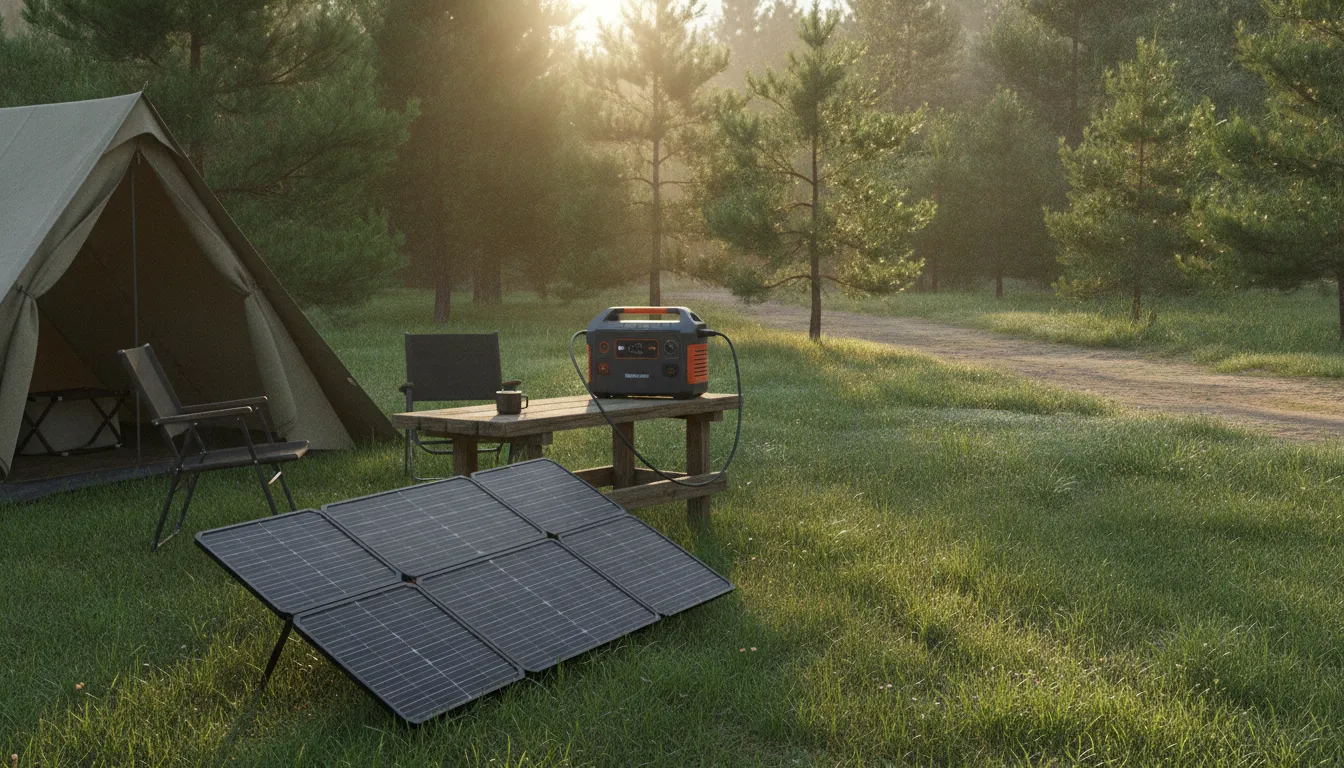
The process begins with the solar panel itself. Portable panels use silicon cells to capture light from the sun and turn it into direct current electricity. Premium panels use advanced solar technology to convert 22 percent of sunlight into usable power. These panels are also foldable, lightweight, and built to survive the elements during rugged outdoor trips. Once the panels capture the sun's energy, they send it through a heavy-duty cable to the power unit.
The central battery storage hub
A heavy-duty portable power station acts as a central battery hub to collect and save this energy. Without a storage unit, the power made by your solar panel would go to waste. Inside the station, a high-tech charge controller manages the incoming power so it does not overcharge the battery. The system then stores this energy inside premium battery cells that are built to last. KEUTEK power stations use premium LiFePO4 batteries that deliver a 10-year lifespan and run in complete safety.
The stored energy is kept as direct current, or DC power. But most home appliances and devices use alternating current, or AC power. To solve this, the power station has a built-in inverter. This device converts the stored DC power into standard AC power. You can then plug in your laptop, phone, or medical devices into the station's outlets just like you would at home.
Quiet power for emergency needs
Once the system stores the solar power, you can use it to run your gear without any noise or fumes. Since 1988, relief teams have used clean solar power to supply quiet, reliable, emission-free electricity during disasters. Unlike gas generators, solar setups do not release toxic fumes or make loud noises. A quality power station operates at an ultra-quiet level under 37 decibels, which is quieter than a soft whisper. This quiet unit makes it perfect for tents, cabins, or indoor emergency backup use.
When you pair a rugged power station with a foldable panel, you get complete off-grid power. This combo gives you peace of mind during storms or long off-grid trips because you will never run out of power. KEUTEK designs all of its gear in the USA to meet strict quality standards so it lasts for years. Every product comes with a lifetime warranty and ships with free 2 to 3-day shipping on orders over 35 dollars. By using the sun to power your life, you get reliable power without any of the anxiety.
Match Your Solar Panel Wattage to Your Power Station's Capacity
To build a strong off-grid system, you must know how energy is measured. Solar panels are rated in watts, which show how much power they can make at any one moment. Power stations are rated in watt-hours, which measure total energy storage capacity. For example, a three-hundred watt-hour battery can run a one-hundred watt tool for three hours.
Pairing these two parts well is the key to clean power. A well-matched system lets you charge your battery fast and run tools without noise. By using solar power, you get a clean alternative to gasoline and diesel emergency generators. This setup keeps your devices charged during a home blackout or on a long road trip.
Understanding Watts and Watt-Hours
It helps to think of watts as the flow of water and watt-hours as the size of the tank. A larger solar panel has a higher wattage, which means it can pump more power into your station. A larger power station has more watt-hours, which means it can hold more total power for your devices. Knowing this helps you avoid running out of power when you are far from home.
If you pair a tiny panel with a massive power station, it will take days to charge. If you pair a huge panel with a small station, you may have more power than you can use. Finding the right balance keeps your system running well without wasting energy or money.
How to Choose the Right Panel Wattage
Matching your station capacity to your panel wattage is vital to get the best recharge times. If your solar panel has too little wattage, your station will charge too slowly. If you use too much panel wattage, you might waste power that the station cannot take in. A good rule of thumb is to look at your daily power needs.
For a small power station, a compact solar panel works best. You can pair a high-quality portable solar panel with your battery for quick charging on the go. KEUTEK offers foldable panels in forty-watt, sixty-watt, and one-hundred-watt sizes. These panels have a high twenty-two percent conversion efficiency and fold up for easy travel.
Checking Voltage and Input Limits
You also need to check the voltage when you choose your solar panels. Every power station has a strict limit on the input voltage it can take. When you choose a solar panel, you must make sure its open-circuit voltage does not go over this limit. This voltage is often written as Voc on the panel spec sheet.
If the voltage is too high, it can damage the charge controller in your station. If the voltage is too low, the station might not charge at all. Checking these specs before you connect your gear ensures safe and steady power. A perfect match gives you a strong portable power station with solar panel setup for any adventure.
How Long Does It Take to Charge a Power Station with a Solar Panel?
When you travel off the grid, keeping your gear charged is vital. Pairing a portable power station with solar panel gear gives you a steady way to stay connected. But many users wonder how much time they need to get a full charge from the sun.
The basic solar math
To find the charge time, you must compare the size of your battery with the power of your panel. Power stations store energy in watt-hours. Solar panels produce power in watts. In a perfect world, you would divide the watt-hours of the battery by the watts of the panel.
This simple math gives you the estimated hours needed to reach a full charge. For example, imagine you have a 280 watt-hour portable power station. If you connect a 100-watt panel, the basic math suggests a charge time of 2.8 hours. But solar charging does not happen in a perfect lab. The real world will change these numbers.
How weather affects charging
In daily use, solar panels do not run at their peak rating. The actual power you get is usually lower because of the weather. In fact, real solar input is typically 60% to 80% of the rated panel wattage due to panel angle, heat, and sunlight.
This means a 100-watt panel might only give 60 to 80 watts of real power. If your panel gets 70 watts of steady power, that same 280 watt-hour battery will take about four hours to charge. It is best to plan for these real-world rates so you do not run out of power when you need it most.
To get the most out of your solar setup, you should place your panels in direct sunlight. Even small shadows from trees or tents can drop your power output by a large margin.
Matching panel size to your battery
You can speed up your charge times by choosing the right panel size. Using a larger portable solar panel helps you collect more energy even on cloudy days. A small panel may take too long to charge a large battery. On the other hand, a larger panel can fill that same battery in just a few hours.
These systems offer a clean option to loud fuel generators. They provide emission-free power that is quiet and safe to use near your camp. By matching your gear to your daily energy needs, you can enjoy steady power without any worry.
What Can a Portable Power Station with Solar Panel Run?
A common question is what a solar-paired setup can actually power. The honest answer depends on the wattage of the station and the wattage of the devices you want to run. The good news is that the most common gear people carry is very achievable.
Everyday devices over the long haul
Phones, tablets, laptops, cameras, small LED lights, and a portable cooler all run comfortably from a compact power station. These devices draw modest wattage, so a three-hundred-watt station recharged by a solar panel can keep them topped up for days. Heaters, microwaves, and large appliances draw far more power, so they belong to higher-capacity units or fuel-powered alternatives.
Home backup during an outage
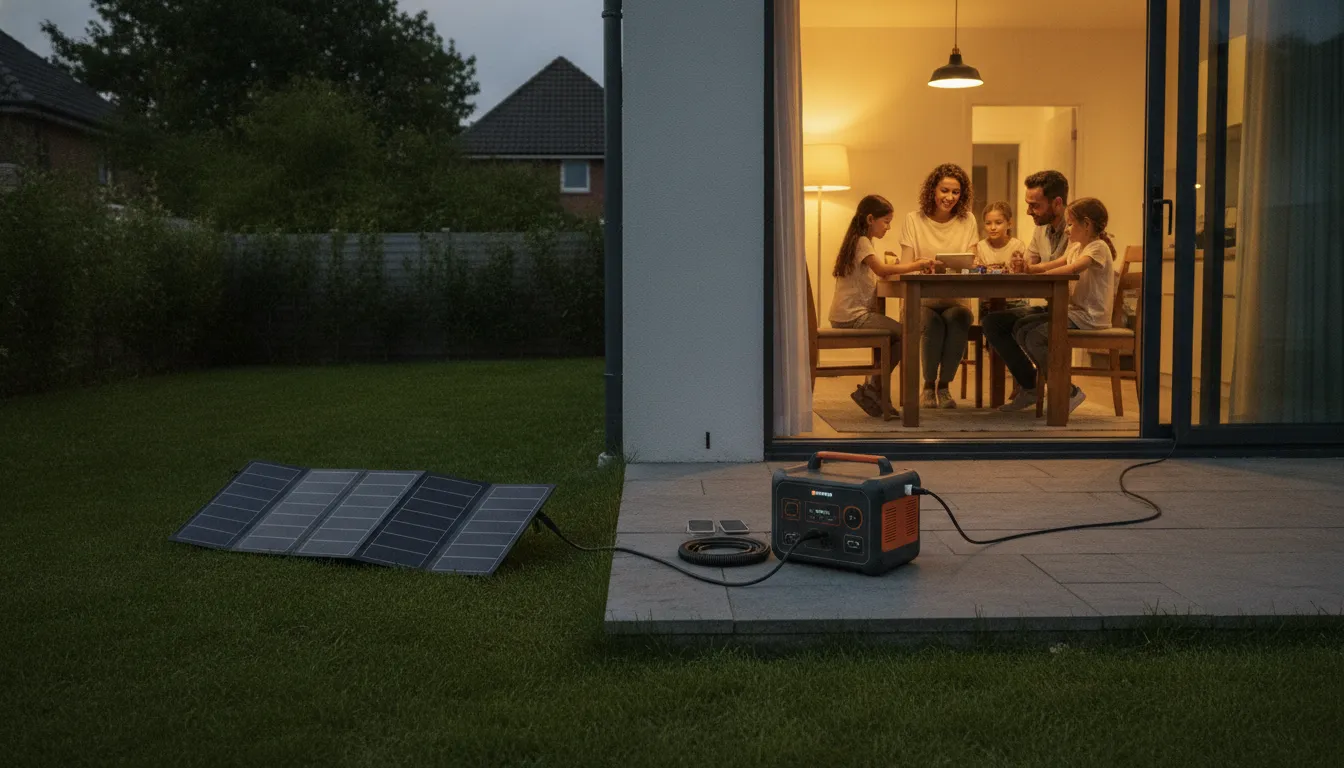
Across the country, solar power has served as quiet, reliable, emission-free backup during emergencies since 1988. Portable solar systems ranging from 100 to 3,000 watts have even been used to power clinics, radios, and medical devices in the field. For a home, a three-hundred-watt station with a foldable panel keeps your phones charged, leaves a lamp glowing, and runs the Wi-Fi router plus a small refrigerator through the night, all without a trip to the gas station.
Choosing the right station for your load
KEUTEK builds its stations to run roughly ninety-nine percent of everyday consumer electronics. The LiFePO4 battery stores power safely, and the internal inverter turns stored DC energy into the AC power your appliances expect. Operation stays under 37 decibels, quieter than a whisper, so you can keep it running in a tent or bedroom without disturbance. Pair a portable power station with a compatible solar panel and you shift from depending on the grid to producing your own clean, dependable power.
Related products


Camping, Outages, and Off-Grid: Choosing the Right Power Setup
Different trips need different power plans. Whether you camp, face a storm, or live off the grid, your setup must fit your needs. A rugged portable power collection gives you the gear to stay connected anywhere. Choosing the right setup depends on how much power you use and how long you will be away from an outlet.
Quiet power for camp sites
When you camp, you want to enjoy nature without the constant hum of a motor. Traditional fuel generators are loud and heavy, but a portable power station with solar panel setup offers a clean, lightweight choice. KEUTEK portable solar panels fold flat for easy travel and turn sunlight into power fast. With this gear, you can run camp lights, power a cooler, and charge your phone under the open sky.
For car camping or long road trips, a portable system lets you run small devices without draining your vehicle's starter battery. You can plug in a portable fridge to keep food fresh or run a fan on hot nights. Since solar panels collect power during the day, you never have to worry about finding an outlet. This setup lets you stay out in the wild for weeks at a time.
Clean backup during power outages
When a storm causes home power cuts, you need a safe power source that you can run indoors. Standard fuel generators must stay outside because they emit toxic fumes. In contrast, solar battery systems give you quiet, safe, and emission-free power during storms. You can keep this compact setup right inside your living room to power medical tools, radios, and tablet devices safely.
Modular energy for off-grid living
Living off the grid needs smart planning for your energy storage. If you stay in a cabin or a travel van, you must store enough power for several days of cloudy weather. Modern systems let you expand your setup as your needs grow. Many premium models allow for modular battery expansion to increase your total off-grid storage.
To make setup easy, choosing a complete solar power station bundle is your best option. These kits pair a high-capacity power station with matching solar panels right out of the box. KEUTEK builds these systems with advanced LiFePO4 batteries that last for over ten years of daily use. They are housed in rugged, travel-ready shells with a lifetime warranty, giving you steady power wherever your adventures take you.
Comparing Portable Power Stations and Solar Panels
Pairing a portable power station with solar panel setups gives you true off-grid freedom. To build the best kit, you must understand how these tools work together. Your choice depends on your daily power needs, travel plans, and gear. A good setup keeps your devices charged and cuts down on power anxiety during emergencies. It allows you to run lights, laptops, and medical gear anywhere.
Understanding Watts and Watt Hours
To match your gear, you need to know the basic terms. Solar panels are rated in watts (W), which measure how fast they make power. Power stations are rated in watt-hours (Wh), which show total energy storage capacity. Matching your station capacity with total solar panel wattage is crucial to get fast recharge times.
If you buy a station with a high capacity but use a tiny panel, it will take days to charge. This makes the system hard to use when you need power fast. On short hiking trips, you can use a small portable solar charger to keep devices ready without a heavy battery.
Solar Controller and Charger Efficiency
Sunlight changes throughout the day. An MPPT charge controller helps solar panels track the maximum power point to boost efficiency. This technology is much better than older PWM controllers in shifting light. But real solar input is often just 60% to 80% of rated panel wattage due to panel angle, heat, and shade.
KEUTEK panels overcome this with a high 22% conversion efficiency. Our stations use LiFePO4 cells for a 10+ year lifespan, giving you durable off-grid power. Choosing these rugged kits gives you a clean way to replace gasoline and diesel emergency generators. They are quiet, safe, and ready to go in any storm.
Finding Your Ideal Solar Setup
Selecting the right setup ensures you never run out of juice. Different setups fit different outdoor and home needs. You must weigh how much weight you can carry against how much power your devices need. Use this quick comparison to find the best match for your next trip.
| Setup and Capacity | Best For | Typical Devices | Portability |
|---|---|---|---|
| 280Wh Station + 60W Panel | Quick camping trips and light gear. | Phones, LED lights, and cameras. | Foldable panel, fits in a small pack. |
| 500Wh Station + 100W Panel | Weekend road trips and off-grid work. | Laptops, drones, and small fans. | Handheld station, easy car storage. |
| 1000Wh Station + 200W Panel | Extended RV trips and home backup. | Mini fridges, CPAP machines, and TVs. | Heavier unit, best for base camps. |
Pair the High Capacity Portable Solar Panel 100W with your station to keep the whole kit charged straight from the sun.
Frequently Asked Questions About Portable Power Stations with Solar Panels
How long does it take to charge a portable power station with a solar panel?
Charging time depends on your station's battery capacity in watt-hours and the real power your panel delivers. In practice, a panel produces roughly 60 to 80 percent of its rated wattage because of sun angle and cloud cover. Divide your station's capacity by the panel's real output to estimate hours of strong, direct sunlight needed for a full charge.
Can I use any solar panel with a portable power station?
Most of the time, yes, but you must check compatibility. Match the panel's voltage to the station's input limit, and keep the panel's open-circuit voltage from exceeding that limit. Choosing a panel from the same brand, such as a KEUTEK station paired with a KEUTEK 100W panel, removes the guesswork.
What is the difference between a portable power station and a solar generator?
A portable power station is a rechargeable battery hub with outlets. A solar generator is that same battery hub bundled with solar panels so it can recharge from sunlight in the field. For most buyers, a station plus a compatible panel is the practical choice.
How do I calculate the wattage my appliances need?
Check each device's wattage rating and add them together for everything you want to run at once. Leave headroom so the combined load stays comfortably below the station's output rating. Most everyday electronics, from phones to laptops to a compact cooler, fit within a modest 300W station.
Are portable power stations waterproof?
Portable power stations are durable but are not meant to sit in heavy rain. They are built to travel in rugged conditions and handle spills and light weather better than home electronics. But you should keep the unit and its ports dry, and station it inside a tent, cabin, or vehicle while the solar panel collects sunlight outside.
Build Your Portable Power Station with Solar Panel Setup
You do not need a battery cabinet, a generator, or a complicated solar installation to gain reliable off-grid power. A quality LiFePO4 power station paired with a foldable solar panel gives you quiet, emission-free energy the day it arrives, with a battery designed to last a decade or more.
Shop KEUTEK portable power stations and solar panels to build a rugged, travel-ready setup that handles camping trips, home outages, and off-grid weekends alike. Every station ships with KEUTEK's lifetime warranty, and orders over $35 qualify for free 2-3 day shipping, so you can be charging from the sun before the weekend.


Leave a comment