

Portable Power Source for Camping: Buying Guide Tips

A Portable Power Source for Camping should match your devices, trip length, and access to recharge points. A phone, camera, GPS unit, lantern, or laptop may each need a different type of power. Weather can also make a simple recharge plan unreliable.
Explore the KEUTEK portable power station
That choice becomes much easier when you separate portability from capacity. Start by identifying what you will charge, how often, and whether you can recharge from a wall outlet, vehicle, or sunlight. Then weigh output, recharge speed, weight, durability, and safe operating conditions against the way you actually camp. If your setup also includes phones or tablets, a dependable fast wall charger can restore devices before you leave home.
Explore KEUTEK portable power solutions for rugged, travel-ready charging before your next campsite.
How do you choose a Portable Power Source for Camping?
The best Portable Power Source for Camping depends on your devices, runtime, and campsite. KEUTEK recommends a power bank for lightweight USB charging, a solar panel to extend compatible gear on sunny days. Or a portable power station for higher capacity, multiple ports, and AC power. Compare watt-hours for stored energy with watts for the load you need.
The right setup depends less on the label and more on what you need to run. Consider how far you travel from the vehicle and how long you will be without a dependable outlet. Most camping power plans use one or more of three source types: a portable power station, a solar panel, or a portable power bank. Each solves a different part of the problem.
When is a portable power station the better choice?
A portable power station is a rechargeable battery system designed to supply several types of output. Its stored capacity is measured in watt-hours (Wh), while its output rating, measured in watts, helps determine which devices can operate at the same time. Many stations also include an inverter, which converts the battery's direct current (DC) into alternating current (AC) for compatible household-style appliances. These fundamentals are outlined by the U.S. Department of Energy in its battery energy storage evaluation guidance.
Choose a station for a basecamp, family campsite, RV setup, or vehicle-supported trip where you may need to run more than phones and small lights. It is the most versatile option when your list includes camera batteries, laptops, CPAP equipment, a cooler, or other equipment that may require AC, DC, or USB connections. Check both continuous and surge output before buying. A device can draw more power briefly when starting than it uses while running.
When does a solar panel make sense?
A portable solar panel is a charging source rather than a storage system. It can replenish a compatible power station or power bank during the day. Making it useful for multi-day trips where access to a vehicle or wall outlet is limited. Solar charging is not constant, however. Panel efficiency, sun angle, and cloud cover all affect the energy collected. Treat solar as a way to extend your setup rather than a guaranteed replacement for stored capacity. The station's solar input rating also affects how quickly it can accept that energy.
Panels work particularly well at an established campsite, overlanding basecamp, or sunny trailhead where you can position them safely for several hours. They are less convenient for fast-moving trips with frequent shade, heavy tree cover, or limited time in one location.
When is a portable power bank enough?
A power bank is the lightest and simplest option for USB-powered essentials such as phones, earbuds, GPS units, and small lights. It fits day hikes, minimalist camps, and backup duty when your main goal is to keep personal electronics available. A bank is not intended to replace a power station for AC appliances or higher-demand equipment. Capacity, port output, weather resistance, and recharge options still matter, so match its specifications to your device list.
For a closer look at that specialized format, see KEUTEK's camping power bank guide. In a broader camping plan, the most practical answer may be a combination: a power bank for each person's daily devices. A station for shared equipment, and a panel to restore energy between uses. That layered approach keeps weight and complexity aligned with the campsite rather than forcing one device to do everything.
How much capacity does a Portable Power Source for Camping need?
Choose capacity and output separately. They answer two different questions: how long your gear can run, and whether the power source can handle the load in the first place. A thoughtful device inventory prevents the common mistake of buying a compact unit that has enough battery storage but cannot start or operate a key appliance.
What does watt-hour capacity tell you?
Watt-hours, written as Wh, describe the energy a battery can store. The U.S. Department of Energy identifies Wh as the typical measure of lithium-ion battery capacity for appliances and other loads. A larger Wh rating generally provides more available energy, but it also tends to add weight and size. Think in terms of your actual trip rather than choosing the largest number available.
List every device you expect to use, its watt draw, and the approximate hours of use. For example, your inventory might include a phone, camera batteries, a lantern, a small fan, a laptop, and a compact cooler. Add their estimated energy needs for the day, then add a practical reserve for changing weather, extra charging, or an unplanned night outdoors. USB devices may use little power individually, while an AC appliance can draw substantially more.
How do running watts and surge watts differ?
Watts measure the rate at which devices use power and determine how much equipment can run simultaneously. Running watts are the continuous demand after an appliance is operating. Surge, or starting, watts are the brief higher demand some motor-driven or compressor-based devices need at startup. The Department of Energy recommends distinguishing between these two requirements when sizing a generator or battery system: your power source must support the continuous total and the highest startup surge.
For a simple first estimate, divide available battery capacity by device wattage: runtime in hours = watt-hours divided by watts. A 1,000 Wh station powering a 60 W bulb illustrates the math, with a cited estimate of about 16 hours. Real-world runtime will be lower because inverter conversion and other system losses reduce usable energy. Battery temperature, device cycling, cable losses, and the station's operating limits can also affect the result, so treat the formula as planning guidance rather than a guarantee.
Which output features matter at the campsite?
Check the station's continuous output rating against the combined running watts of the devices you will use at once. Then compare its peak rating with the startup requirement of anything containing a motor or compressor. If you plan to power sensitive electronics through an AC outlet, a pure sine wave inverter is the preferred option for compatibility. Inverters convert the battery's DC power into the AC power used by many household-style appliances, so the outlet type and inverter rating both matter.
A compact setup for phones, lights, and camera batteries may need far less output than a campsite setup that adds a laptop, fan, or cooler. For a balanced option with a 300 W output class, review the reliable portable power station and compare its ports and ratings with your inventory before packing.
Which recharge methods and outlets matter off grid?
A useful setup should fit both your destination and your daily routine. Most portable power stations support some combination of AC wall charging, solar input, and car charging, giving you more than one way to restore energy between campsite stops. The U.S. Department of Energy identifies these as common recharge methods for portable power stations. But each works best in a different situation: AC is predictable, solar is independent, and car charging is practical while you travel. Energy.gov explains the main charging and power considerations.
When is AC wall charging the best choice?
AC charging is usually the fastest and most consistent option when you have access to a home, cabin, campground outlet, or other dependable electrical source. Fully charge before leaving, then reserve the station's stored energy for the hours when grid power is unavailable. This approach also makes it easier to start a trip with a known charge level instead of estimating how much sunlight you will receive.
Check the included charger and the station's input specifications before connecting it. A compatible AC input protects the charging system and helps you plan realistic turnaround time. If you are moving between established campgrounds, a station with a straightforward wall-charge routine may be more useful than one designed primarily around solar replenishment.
How should you plan for solar charging?
Solar can extend an off-grid trip, but it should not be treated as a guaranteed constant supply. Recharge performance depends on panel efficiency, the angle of the sunlight, and cloud cover. A panel facing strong, direct sun can deliver a very different result from the same panel placed flat beneath tree cover. Reposition the panel as the sun moves, keep it free from shade where possible, and treat cloudy conditions as a slower-charge scenario rather than a failure.
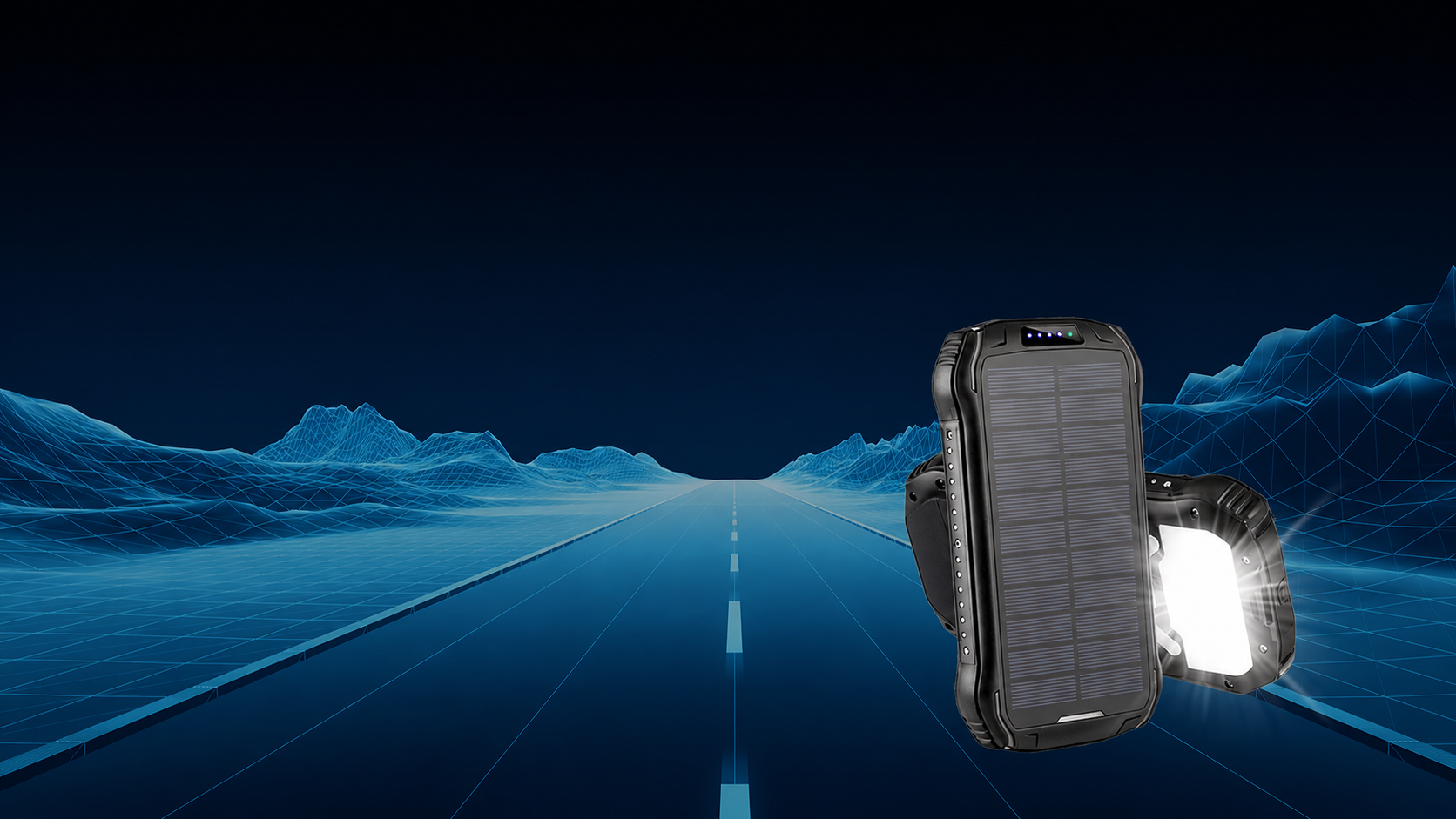
The station's solar-input rating matters just as much as the panel. That rating limits how much solar power the station can accept, which affects recharge speed. Pairing a panel with an input the station cannot use fully may add cost or bulk without shortening the charge time. For a narrower look at panel-and-bank planning, see KEUTEK's camping power bank guide. If your setup centers on a larger station, the portable solar power generator for camping guide offers a more specialized follow-up.
Related products


What outlets should a campsite power source include?
Match the outlet mix to the devices you actually bring. AC outlets support household-style chargers and appliances, while USB ports are convenient for phones, headlamps, cameras, tablets, and other devices that charge directly by USB. DC outputs can be useful for compatible camping accessories and vehicle-oriented electronics. Using the native port when available avoids carrying unnecessary adapters and can reduce cable clutter around the tent or table.
Also review whether the station can power several devices at once and whether its inverter is suitable for sensitive electronics. The Department of Energy notes that inverters convert battery DC into the AC power used by many household appliances. A practical Portable Power Source for Camping therefore combines recharge flexibility with an outlet layout that keeps your essential devices connected, organized, and within the station's rated limits.
Which Portable Power Source for Camping fits your trip?
The best setup depends on what you need to run, how far you are carrying it, and whether you can recharge during the trip. A power station is the central option for campsite appliances and several devices. A solar panel is a recharge source rather than a battery by itself. A power bank is the lightest choice for topping up phones and other USB devices.
Compare the tradeoffs before you pack. Battery capacity is measured in watt-hours (Wh), while watt output indicates which devices can run at the same time. An inverter converts battery DC power into AC power for household-style appliances. These distinctions matter when a compact bank is enough for a weekend hike, but a station is more practical for a base camp. The U.S. Department of Energy explains the relationship between capacity, output, and inverters.
| Option | Best use | Capacity approach | Outlets | Recharge | Portability | Limitations |
|---|---|---|---|---|---|---|
| Power station | Best for running several camping devices from one central battery. | Capacity is rated in Wh and selected according to total energy demand. | Outlets can include AC, USB, and DC connections, depending on the model. | Recharge can use an AC outlet, solar panel, or car charging port. | Portable for car camping, tailgating, and base camps, but heavier than a bank. | Higher-capacity models take more room and require a realistic weight plan. |
| Solar panel | Best for replenishing compatible batteries when daylight is available. | A panel produces charging power rather than storing a fixed battery capacity. | Connections must match the power station or device being recharged. | Charging depends on panel efficiency, sun angle, and cloud cover. | Foldable panels can pack flat and add little battery weight to a camp kit. | It cannot reliably replace stored energy when shade, clouds, or nighttime persist. |
| Power bank | Best for phones, lights, and other small USB devices on lightweight trips. | Capacity is designed for personal electronics rather than AC appliances. | Outputs are generally USB connections suited to compatible devices. | Recharge may use a wall outlet, vehicle connection, or integrated solar feature. | Small and easy to carry for hiking, travel, and short overnight trips. | It usually cannot provide AC outlets or the output needed for larger equipment. |
For car camping, a power station paired with a solar panel is usually the more flexible combination. The station stores energy for evening use, while the panel can help replenish it during the day. Check the station's solar input rating because that specification affects recharge speed. Solar output also varies with panel efficiency, positioning, and cloud cover, so treat daylight charging as a supplement rather than a guaranteed schedule. A station can support camping, remote work, and other off-grid use without fuel or exhaust, and it operates more quietly than a gasoline generator. Review the Department of Energy's battery-storage evaluation guidance when comparing technical specifications.
For a lightweight trip, carry a power bank and select a compact solar panel when you expect meaningful daylight exposure. KEUTEK's high-capacity portable power bank fits travelers who primarily need personal-device charging. Choose a station for AC equipment or several simultaneous loads. The right Portable Power Source for Camping matches your load, recharge access, and carrying limits.
How do you use and store camping power safely?
A well-planned setup protects your devices, your battery, and everyone sharing the campsite. A portable battery station is not the same as a fuel-burning generator: it produces no exhaust, while gasoline equipment burns fuel and can create deadly, odorless carbon monoxide. The CDC explains that carbon monoxide is present in fumes from fuel-burning engines and other appliances. Always follow the campsite rules and the manufacturer instructions for the specific equipment you bring.
- Plan the load before connecting anything. List the devices you expect to run, including lights, phones, cameras, coolers, and medical or communication equipment. Check both the station's watt-hour capacity and its maximum output. Watts determine the devices that can operate simultaneously, while watt-hours describe stored energy. Also check starting or surge watts for equipment with a motor, since startup demand can exceed its running wattage. Leave a reasonable reserve instead of planning to use every available watt-hour.
- Place the battery station on a stable, dry, ventilated surface. Keep air openings clear, protect the unit from rain and splash, and do not cover it with clothing, bedding, or gear while it is operating. Keep cords organized and inspect them for damage before use. A battery station does not need exhaust ventilation, but it still needs airflow and should not be exposed to water, crushing, or excessive dust.
- Keep fuel-burning generators completely separate from living spaces. A gasoline generator must never be operated inside a tent, cabin, vehicle, garage. Or other enclosed area, and it must not run near doors or open windows where fumes can enter. The National Park Service warns about carbon monoxide poisoning risks, and outdoor placement alone does not make careless positioning safe. A battery station avoids combustion emissions, but it is not a reason to use a fuel generator indoors.
- Manage temperature during use and charging. Avoid charging a portable power station in extreme heat or cold. Give the unit time to return to a moderate temperature if it has been sitting in direct sun or a cold vehicle. Solar charging can also vary with panel angle, efficiency, and cloud cover, so do not treat a slow charge as proof that the station is defective. Follow the product's specified operating and charging limits.
- Use the battery-management system as protection, not permission to ignore warnings. A smart BMS can help protect against overcharging, short circuits, and overheating. Stop using the station if it displays a fault, becomes unusually hot, swells, smells abnormal, or shows physical damage. Do not open the battery enclosure or attempt an improvised repair.
- Care for the battery between trips. Disconnect accessories when they are no longer needed, keep the ports clean and dry, and avoid repeatedly draining the unit farther than necessary. Inspect the case, cables, and connectors before packing. A portable power station requires less routine maintenance than a fuel generator because it has no fuel, oil, or spark plugs, but it still needs basic inspection.
- Store it cool, dry, and protected. Before a longer break, charge and store the station according to the manufacturer's guidance. Keep it away from direct sunlight, standing water, extreme temperatures, and loose metal objects that could bridge a connector. Secure it during vehicle transport so it cannot slide, fall, or be crushed.
These habits make a Portable Power Source for Camping easier to use responsibly while preserving capacity for the moments when reliable off-grid power matters most.
Sources: CDC carbon monoxide guidance, National Park Service carbon monoxide guidance, and U.S. Department of Energy battery energy storage guidance.
Explore KEUTEK portable power solutions for rugged, travel-ready charging that fits your next campsite.
What should you check before buying a camping power source?
A dependable camping setup starts with matching the power source to the way you actually camp. Before comparing brands or features, list the devices you expect to bring. How often you will use them, and how far your campsite is from a vehicle or wall outlet. That simple inventory helps you avoid paying for capacity you will not use or choosing a compact option that cannot handle your essential devices.
Capacity and output
Check battery capacity in watt-hours (Wh), then compare it with the wattage of your devices and the number of hours you expect to run them. A phone, camera, lantern, laptop, cooler, and medical device can create very different demands. Also check continuous output and surge output. Devices with motors or compressors may need extra power when they start, even if their normal running wattage looks modest.
For a larger device mix, review the available AC outlets, USB ports, and DC outputs rather than focusing on one headline wattage. A practical KEUTEK portable power station can be a better fit when you need to operate several types of gear from one compact unit. Confirm that its ports match your cables and that the inverter is appropriate for the electronics you plan to connect.
Recharge options and campsite fit
Look for more than one way to recharge. AC charging is useful before departure, while car charging can help during a road trip. Solar input adds flexibility for longer stays, but real-world performance depends on panel efficiency, sun angle, and cloud cover. Check the station's solar input rating and the panel connection requirements before assuming that a solar panel will restore the battery quickly.
Portability is more than the number on a product page. Consider the unit's dimensions, carrying handle, cable storage, and whether one person can move it safely from the vehicle to the tent or campsite table. A power bank may be ideal for phones and small USB devices, while a power station is more suitable for a mixed load. If your needs are primarily personal electronics, review this high-capacity portable power bank as a more compact option. A fast car charger can also complement a station when your vehicle is part of the recharge plan.
Durability, compatibility, and support
Camping exposes equipment to transport, dust, temperature changes, and repeated handling. Favor rugged construction and clear operating guidance. Check temperature limits, ventilation, battery chemistry, and charging instructions. A built-in battery-management system can help protect against overcharging, short circuits, and overheating.
Finally, evaluate support before purchase. Look for a clear warranty and responsive customer service. KEUTEK combines high-performance charging with durable designs intended for travel and off-grid use. Review the portable power collection alongside your device list. For devices that stay in daily rotation, the ProSeries Max fast-charging cable adds a durable connection between your charger and compatible gear.
Compare the KEUTEK portable power station
KEUTEK backs its travel-ready approach with a lifetime warranty and customer-first support. Review the product details and operating guidance for your chosen setup before heading off grid.
Frequently Asked Questions
What size power station do I need for a weekend camping trip?
Start with the devices you plan to run, their wattage, and the number of hours you expect to use them. Add those daily energy needs in watt-hours, then choose a station with extra capacity for charging losses, weather changes, and unexpected use. Remember that watt-hours measure stored energy, while watts determine how much equipment can run at the same time. A station rated for your total wattage may still need additional surge capacity for devices with motors or compressors. The U.S. Department of Energy distinguishes running watts from starting watts when sizing portable generators.
Can I recharge a camping power station with solar panels?
Yes. Many portable power stations support solar, AC wall, and vehicle charging, giving you several ways to restore power away from home. Solar recharge speed depends on the panel's output, the station's solar-input rating, panel efficiency, sun angle, and cloud cover. Set the panel where it receives consistent direct sunlight, and treat solar as a replenishment method rather than a guaranteed replacement for a full wall charge. The Department of Energy identifies sunlight angle and cloud cover as factors in solar charging performance.
Is a power bank enough for camping?
A power bank is often the best fit for phones, earbuds, cameras, and other USB devices when you want the lightest setup. Choose a portable power station instead when you need AC outlets, higher sustained wattage, or power for several device types. A solar power bank can extend flexibility on the trail, but its output and stored capacity are more limited than those of a larger station. Match it to your device list and trip length.
Are portable power stations safe to use at a campsite?
Battery power stations do not produce exhaust and are generally quieter than fuel generators, but they still require responsible handling. Keep the unit dry, provide ventilation around its cooling areas, follow the manufacturer's charging limits, and avoid charging or storing it in extreme temperatures. Built-in battery-management systems can help protect against overcharging, short circuits, and overheating. Fuel-burning generators require stricter precautions because carbon monoxide is odorless and potentially deadly; never use one inside a tent, vehicle, garage, or other enclosed space. The CDC explains that carbon monoxide is produced when fuels burn.
Ready to choose your camping power setup?
The right combination of capacity, output, and recharge options can make off-grid charging simpler across weekend campsites and longer trips. Review your devices, travel conditions, and preferred charging methods, then explore a solution that fits the way you camp.
Learn more about KEUTEK portable power solutions for rugged, travel-ready camping power.


Leave a comment