

Finding the Most Durable Charging Cable for Your Devices

Standard charging cables usually fail at the connector neck after just a few thousand bends. This frequent breakage forces users to buy cheap replacements that always fail again within months. Finding a truly rugged cable needs you to check actual lab-tested strength ratings.
The most durable charging cable is built to survive tens of thousands of bends and high pulling stress without inner failure. While basic cables might last through 11,500 bends, top versions use tough military-grade materials to triple that lifespan. According to Consumer Reports, a typical cable faces five twists per day, making a high bend rating vital for long-term value. Factors like double-braid nylon and tough fiber cores ensure the cable stays working under heavy use. These rugged designs stop the fraying and power loss found in cheap cords. Choosing a cable with a 30,000+ bend rating and strong necks provides steady power for years. This simple choice saves you from the pain and cost of constant cable failure.
Knowing these specs is key to finding a cord that lasts a lifetime. You should know which materials stop wires from snapping and which are just for show. To pick the right gear, we must look at What Makes a Charging Cable Truly Durable? The answer starts with
What Makes a Charging Cable Truly Durable?
A good charging cable must handle the stress of daily use. Most cables break because of repeated bending and pulling. This way of breaking is called mechanical fatigue. Studies show that cyclic loading is the main cause of failure in power cables. This stress weakens the parts until the wires inside snap. To build a cable that lasts, makers must focus on the outer shell, the inner core, and the plugs.
Tough Outer Shell Parts
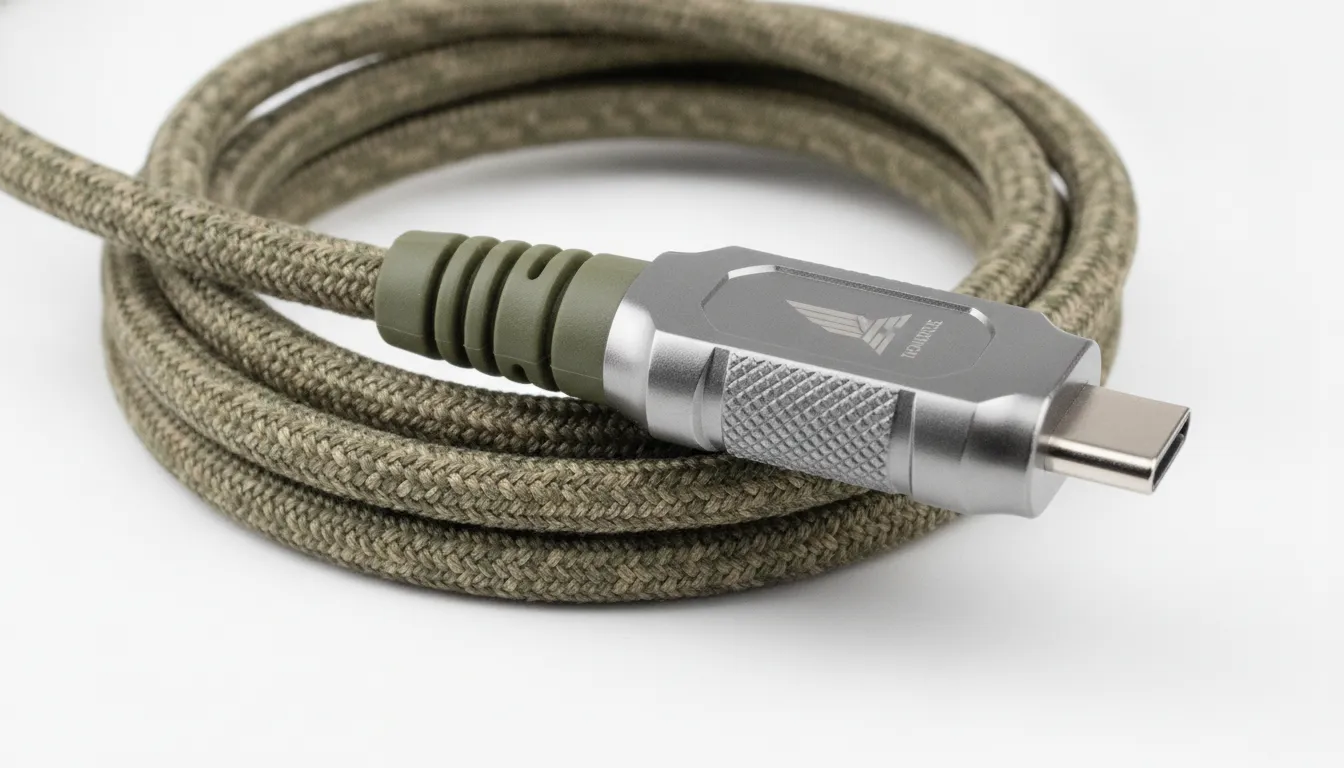
The first line of defense is the outer jacket. While cheap cables use thin plastic, the durable braided USB-C cable uses woven nylon. This cloth stops the cable from tangling and resists cuts. It also helps the cable keep its shape after years of use. Braided nylon is tougher than standard rubber covers.
Inside the jacket, some cables add aramid fibers. These fibers are used in bulletproof vests. They give the cable high pull strength. This means you can pull on the cable with force without stretching the wires inside. A strong outer shell keeps the inner parts safe during travel or outdoor use.
Durable cables often use these key parts:
- Double-braid nylon for better protection from scrapes.
- Aramid fibers to boost pull strength.
- Aluminum plug housings for impact protection.
- Inner shielding to reduce stress and noise.
Better Inner Wiring and Shielding
The heart of a cable is the wiring that carries power. Cheap cables use a single thick wire that can break easily when bent. High-end designs use multi-strand wire setups. These small wires are more flexible than one large wire. They can bend thousands of times without breaking. This makes the cable easier to handle and store.
Inner shielding is also vital. This layer protects the power flow from noise. It also adds a layer of physical protection. Good shielding keeps the wires from rubbing against each other. This reduces wear and tear. It also helps the cable charge your devices at top speed for a long time.
Strong Strain Relief and Plugs
Most cable breaks happen next to the plug. This is where the cable bends at sharp angles. To solve this, the durable magnetic charging cable uses a long, flexible neck. This is called strain relief. This part spreads the stress of a bend over a larger area. It prevents the inner wires from kinking at the plug.
The plugs themselves must be tough. Aluminum housings are a top choice because they resist hits and look great. These covers protect the sensitive USB-C parts from being crushed. A solid bond between the wire and the plug is the best way to keep your phone or laptop powered up.
Testing is the only way to prove a cable is tough. Some cables undergo checks to make sure they handle 30,000 bends or more. This is three times the common standard for basic chargers. By combining smart design with tough parts, you get a tool that handles home, car, and outdoor use for years.
Braided vs. Rubber Charging Cables: Which is Better for Long Life?
Most people have a drawer full of broken cords. These cords often fail at the neck or fray near the plug. When you look for a rugged charging cord, you usually see two types. One is the smooth rubber cord that comes with most phones. The other is a tough, braided nylon cord. Both charge your phone, but they handle daily stress in other ways.
Choosing the right cord build can save you money and time. A cord that breaks in a few months is a bad deal. You want a cord that can live through being tossed in a bag or pulled from a wall. The build of the outer shell is the first line of guard against these forces.
Why braided nylon lasts longer
Braided nylon cords are made by weaving small plastic threads around the core. This outer layer acts like a shield for the wires inside. It helps the cable resist scuffs and cuts from sharp edges. Braided cords also stay straight and do not tangle as much as rubber ones. Because they are stiff, they help stop the cable from bending too sharply at the ends.
Braided cord builds are used to boost pulling strength and stop tangles in phone cords. High-quality braids can support a lot of weight without stretching the wires inside. This prevents the internal parts from snapping when the cord gets caught. The dense weave keeps the shape of the cord even after years of heavy use.
The risk of standard rubber cords
Standard rubber cables use soft plastics like PVC or TPE. These materials are easy to bend, which makes them feel nice, but it also makes them weak. Over time, the soft shell can tear or stretch out. When the shell breaks, the thin wires inside are left open to damage from dust and air.
The life of cords used in digital tools is hurt by constant bending, which leads to wear and break down. Every time you use your phone while it is plugged in, the cord moves. Constant bending is a main cause of mechanical fatigue and failure in small digital cords. Rubber cords often fail at the plug because this area lacks extra support.
Soft outer shells like TPE do not guard against scuffs as well as braided nylon. If you drag a rubber cord across a rough floor, it may peel. A woven nylon cable will glide over the same surface without any harm. This makes the braided type a better choice for travel and outdoor use.
| Feature. | Braided Nylon. | Rubber / PVC. |
|---|---|---|
| Material Build. | Woven plastic shield. | Soft plastic shell. |
| Bend Lifespan. | Up to 30,000+ bends. | 1,000 to 5,000 bends. |
| Tangle Resistance. | High (stays straight). | Low (coils easily). |
| Scuff Guard. | Great. | Poor. |
| Relative Price. | Mid to High. | Low. |
How to spot a tough design
When you buy a new cord, look at the ends. The best ones have long, soft necks where the cord meets the plug. This part is called the strain relief. It spreads the force of a bend over a large area. This stops the wires from kinking at a sharp angle, which is how most cheap cords die.
A good cord also needs strong guts. Look for cables with multi-strand wires. These wires are more bendy than solid cores. They can bend thousands of times without breaking inside. By choosing a braided cord with a high bend rating, you ensure your device stays powered up for a long time.
Understanding Cable Bend Ratings: Reality vs. Marketing Hype
A bend cycle rating tells you how many times a cable can flex before it stops working. Many brands claim their products can handle 10,000 to 50,000 bends. While these numbers look good on a box, they often come from lab tests. These tests do not always match how we use devices at home or on the go. A universal testing apparatus mimics real-world use by applying stress to a cable. But these machines often bend the cord in a controlled way that differs from daily wear.
How lab tests work
In a lab, a machine bends the cable back and forth at a fixed angle. This helps brands find the point where mechanical fatigue causes the internal wires to fail. Research shows that cyclic loading is a top cause of failure in motion cables and electronic parts. While these tests provide a baseline, they do not account for heat, dirt, or sharp tugs. A cable with a high rating is a good start, but it is not the only thing that matters for long life.
The role of strain relief
The most common point of failure is where the cord meets the plug. This spot takes the most stress when you pull or twist the cable. Properly designed most durable charging cable options use reinforced strain relief to protect these joints. If this part is too stiff, the cable may snap. If it is too soft, the internal wires will pinch and break. Premium designs use flexible materials to spread the stress. This helps prevent damage to the wires inside.
Real world versus ratings
Real-world use is much harder on gear than a lab machine. One study suggests the average cable gets bent or twisted about five times a day. Based on that rate, a cord that handles 11,500 bends should last for over six years. You can find more details on this in the Consumer Reports guide on charger life. To get the best value, look for cables that combine high bend ratings with strong outer covers and smart connector designs.
Does Tensile Strength Matter for a Charging Cable?
Tensile strength is the total sum of pull force a wire can take before it breaks. When you look for a high-performance power connection, you want to know it can handle a hard tug. A high strength rating means the inner wires and outer wrap will not snap under stress. Most thin cords fail because the parts inside cannot handle the tension when you pull them from a wall or bag.
Many people think all cables are the same on the inside. But cheap cords often use thin copper that snaps with just a few pounds of force. A tough cable uses thick wire and strong shielding to stop this. By using better parts, a cord can last for years rather than months.
The role of inner support
Top cords use tough fibers to stay strong. Many brands now use aramid fibers to boost how much weight a cord can hold without getting heavy. These fibers are the same stuff used in body armor. For one case, a heavy-duty USB-C cord can often hold over 200 pounds of weight. This inner support keeps the thin copper wires safe even if you trip over the cord or pull it by mistake.
The way these fibers are woven also makes a big change. Makers wrap the fibers around the copper wires to act like a spine. This stops the wires from stretching too far. If a wire stretches, it can get thin and hot, which might lead to a fire or a dead device.
Pulling force versus bending stress
It is vital to know that pull force is not the same as bend stress. Bending the cord back and forth creates what pros call cyclic loading, which wears out the metal over time. Pulling force is a straight tug that tries to snap the cord in two. A good cable needs to handle both to be tough.
While a bend test shows how long a cord lasts in daily use, tensile strength shows how it holds up to sudden, sharp force. Most people break their cords by pulling on the wire instead of the plug. High tensile strength protects the cord when this happens, keeping the link between the plug and the wire solid.
How to test cable strength
Makers use a special testing machine to check how much stress a cord can take. These machines pull the cable at both ends until something gives way. This helps makers find the exact point where the cord fails so they can make it better.
- Secure the cable ends into the grips of a pull test machine.
- Set the machine to pull the cord at a slow, steady speed to mimic a real tug.
- Watch the sensors to see how much force the cord takes before it begins to stretch.
- Record the weight load at the exact moment the outer sheath or inner wires snap.
- Check the data to see if the cord meets its safety and toughness goals for daily use.
How to Choose the Most Durable USB-C Cable for Your Devices
Finding a premium durable charging cable starts with knowing your daily habits. If you use your devices at a desk, a flexible cable might be enough. But for travel or outdoor use, you need a cable built to last through thousands of bends and pulls. Choosing the right build can save you from buying new ones every few months.
Check the bend test and tensile strength
Repeated bending is a main cause of cable failure. This cyclic loading leads to fatigue in the internal wires. Premium cables undergo tests to prove their strength. Most basic cables handle a few thousand bends, but high-quality ones can handle over 11,500 bends. This is about six years of use for most people. KEUTEK ProSeries Max cables go even further with a 30,000+ bend rating.
Tensile strength is also key if your cable gets pulled or snagged. This tells you how much pulling force a cable can take before it breaks. Look for cables with reinforced internal fibers like aramid or nylon. Our ProSeries Max cables feature a 220 lb tensile strength. This makes them some of the toughest options you can buy today.
Look for braided nylon and reinforced connectors
The outer shell protects the wires inside from damage. Braided nylon is a top choice because it resists tangling and kinking. It is much tougher than the rubber coatings found on many basic cables. A durable 100W USB-C cable like the KEUTEK Sovix is perfect for users who want a simple, strong connection for their laptop or phone.
Pay close attention to where the cable meets the plug. This spot is where most cables fray or snap. Good cables have long, flexible strain relief points to spread out the stress when the cable bends. Durable designs also use aluminum housings for the plugs. These metal shells resist impacts better than plastic and help keep the parts safe from wear over time.
Match the cable to your charging needs
Durability is only half of the story. You also need a cable that can keep up with your device power needs. If you charge a laptop, you will need a 100W or 240W cable to get full speed. Using a weak cable for high-power charging can lead to extra heat, which can wear out the materials faster. Always pair your device with rated cables and compatible fast wall chargers to ensure a safe power connection. Always check the wattage rating before you buy to make sure it fits your tech.
For those who want the best of both worlds, magnetic cables offer a unique fix. They reduce the wear on your device charging port by using a detachable tip. This setup also prevents the cable from snapping if someone trips over it. Whether you choose the magnetic ProSeries Max or the fixed Sovix. Picking a cable with a lifetime warranty is the best way to ensure your power never cuts out.
Frequently Asked Questions
What is the lifespan of a charging cable?
Most standard charging cables last for a few years with normal use. Research from Consumer Reports shows that some basic cords can handle over 11,500 bends. This is equal to about six years of life if you bend the cord five times each day. Better cables with higher ratings will often last much longer than this.
Which brand of charging cable is best for durability?
The best brand for a charging cable is one that offers a high bend rating and a strong warranty. KEUTEK provides some of the most durable charging cables on the market today. Their cables feature a 30,000+ bend rating and can hold up to 220 pounds of weight. Since these cables also come with a lifetime warranty, they are a top choice for long life and steady use.
How many bend cycles should a durable cable handle?
A truly durable charging cable should handle at least 12,000 bend cycles during lab tests. Most standard cords only handle about 3,000 bends before they start to fail. High-end cables, such as those from KEUTEK, are rated for 30,000 bends or more. A higher rating means the inside wires are better kept safe from the wear and tear of daily use.
What is cable tensile strength and why does it matter?
Cable tensile strength is the maximum pull force a cable can withstand before snapping. It matters because many users break cables by tugging the cord rather than pulling the connector plug. High-quality cables, such as KEUTEK's 220 lb tensile strength cords, use inner aramid fibers to support sudden pulls and protect internal wiring.
Ready to get the most durable charging cable that lasts always?
Thin cords cost you money and leave you with the high risk of a dead phone when you need to make a very urgent phone call. Changing your gear today stops the bad cycle of buying cheap cords that end up in the trash after just a few short weeks of use. Start feeling sure about your power right now by picking a build that stands up to daily stress and stays fast for the long haul.
Ready to get a new cord? Shop KEUTEK's ultra-durable fast-charging cables to get the very fast power you need for all your many home and work gear items starting right now and always.


Leave a comment