

Lightest 20000mAh Power Bank: A Smarter Buying Guide

Lightest 20000mAh Power Bank: What Matters Beyond Weight
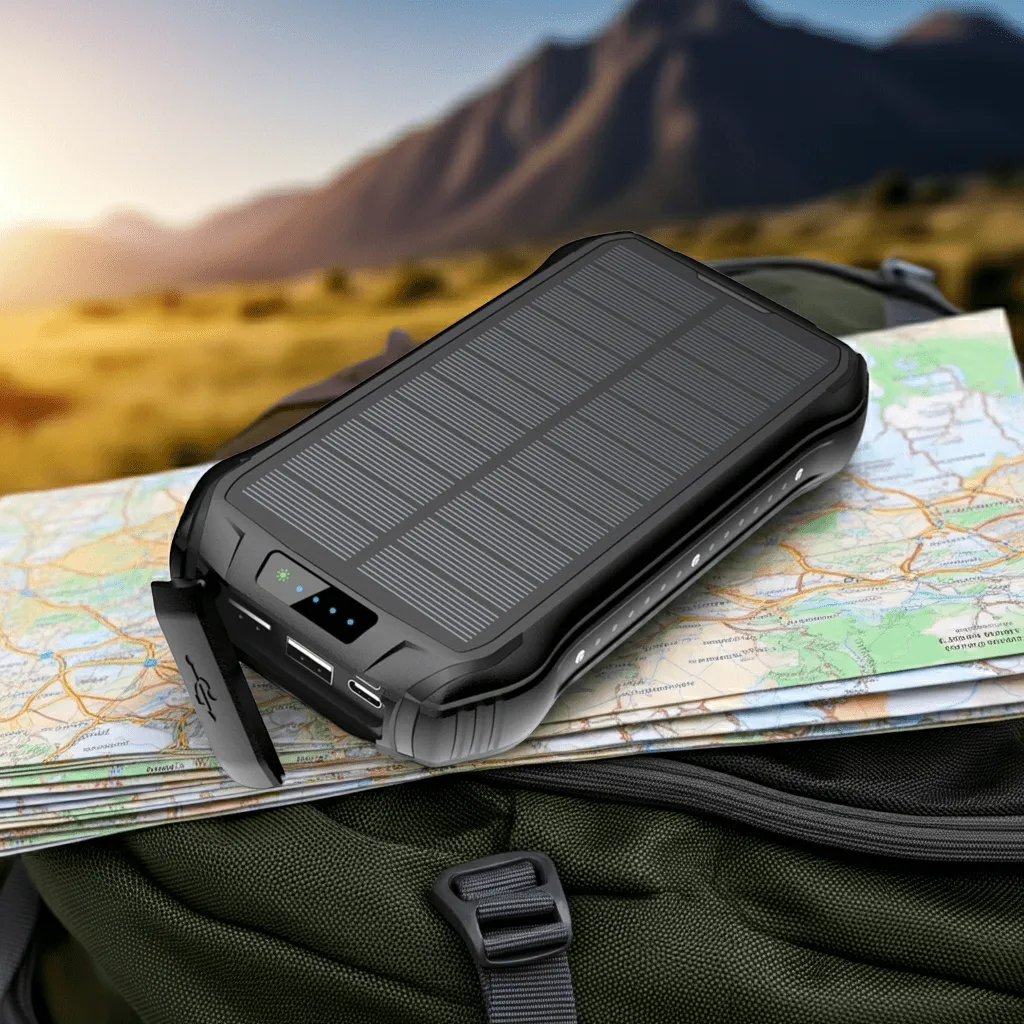
The lightest 20000mAh power bank is not automatically the best one to carry. Weight matters, especially when every ounce counts in a backpack or carry-on. However, usable capacity, output power, port selection, recharge time, thermal management, and enclosure strength determine whether a battery pack performs when needed. The right choice balances low mass with dependable power instead of chasing the smallest number on a specification sheet.
This guide explains how to compare lightweight 20000mAh power banks without relying on marketing shorthand. It is written for frequent travelers, outdoor users, tech professionals, and prepared households that need a practical reserve for phones, tablets, accessories, and other compatible devices.
What makes a 20000mAh power bank truly lightweight?
Quick answer: A lightweight 20000mAh power bank combines high-energy-density cells, an efficient circuit board, a compact port layout, and an enclosure that protects the battery without unnecessary bulk.
The cells account for most of a power bank's mass, but they are only part of the design. Control electronics regulate input, output, heat, and safety functions. Ports, wiring, displays, and the enclosure add more weight. A manufacturer can reduce mass by choosing efficient components and simplifying the exterior, but cutting protective material or thermal safeguards is not a worthwhile trade.
Compare products on a consistent basis. Check the listed weight with any integrated cable attached, and consider the separate cable and charger you will actually pack. A battery that looks lighter on paper can create a heavier total kit if it requires extra accessories.
- Cell design: Higher energy density can store more energy per unit of mass.
- Power electronics: Efficient conversion reduces wasted energy and heat.
- Enclosure: A strong, well-fitted shell protects cells without excessive material.
- Integrated features: Screens, built-in cables, and extra ports add convenience and weight.
Why does usable capacity differ from the 20000mAh rating?
Quick answer: The advertised 20000mAh rating describes the capacity of the internal cells at their native voltage. Your device receives less usable energy because voltage conversion, heat, cable resistance, and charging control consume part of the stored energy.
Milliamp-hours are useful when comparing batteries built around similar cell voltages, but watt-hours provide a clearer view of stored energy. Watt-hours account for both capacity and voltage. This matters for realistic runtime estimates and for travel, where airline policies generally focus on watt-hour ratings rather than the large mAh number printed on the case.
No power bank transfers every unit of stored energy into a device. The battery's internal voltage must be converted to the voltage requested by the connected device. Conversion losses increase when electronics are inefficient, cables create resistance, or the pack operates outside a comfortable temperature range. Your phone also uses energy while it charges, which further affects observed results.
Look for a clearly stated watt-hour rating and realistic expectations. Treat any estimate of device recharges as situational because battery size, device activity, temperature, and cable quality all influence the result.

How should you compare charging speed and ports?
Quick answer: Match the power bank's output protocols and wattage to the devices you carry, then confirm that its input supports a practical recharge time. A high capacity pack is less useful when it cannot deliver or recover power efficiently.
Start with your most demanding device. A phone, tablet, camera, handheld console, and USB-C laptop can request very different power levels. The power bank and cable must support a compatible charging protocol for the device to receive its preferred rate. If either component is the limiting factor, charging falls back to a lower level.
Port count also requires context. Multiple ports are useful for shared travel and emergency kits, but total output may be divided when several devices charge at once. Review the combined-output specification instead of assuming every port can provide its maximum simultaneously. A clear port layout also makes it easier to connect larger plugs without blocking adjacent ports.
| Specification | Why it matters | What to verify |
|---|---|---|
| Single-port output | Sets the ceiling for one connected device | Protocol and wattage match your device |
| Combined output | Controls performance with multiple devices | Total available power and how it is shared |
| Input power | Affects how quickly the bank can be refilled | Supported input and compatible wall charger |
| Port mix | Determines cable compatibility | Enough suitable ports for your everyday kit |
For a compact charging system, pair the bank with a verified cable and an appropriately rated charger. KEUTEK's active ProSeries Max fast-charging cable provides a durable cable option for compatible devices, while the fast wall charger collection helps complete a travel-ready setup.
When is the lightest 20000mAh power bank the wrong choice?
Quick answer: An ultralight model is the wrong choice when lower weight comes at the expense of the output. Ports, thermal design, enclosure strength, or controls required for your use case.
Weight should be evaluated as one constraint, not the final verdict. A frequent flyer who charges one phone may value a slim, simple pack. A photographer, remote worker, or family emergency kit may benefit more from multiple ports, stronger output, clearer status information, and a rugged enclosure. Those features can justify a modest increase in mass.
Environmental conditions matter too. Cold can reduce short-term battery performance, while high heat accelerates battery wear and can trigger protective controls. Outdoor gear is more likely to be dropped, compressed, or exposed to dust and moisture. A power bank that saves a few ounces but cannot tolerate your normal conditions is not truly efficient.
Choose low weight first when:
- You carry the bank daily and charge only small devices.
- You already own the correct compact charger and cable.
- Your route offers regular opportunities to recharge the bank.
Prioritize capability and durability when:
- You rely on power during long trips, outages, or remote work.
- You need to charge several devices or higher-demand equipment.
- The battery will travel in a crowded pack or outdoor kit.
What safety and durability details deserve attention?
Quick answer: Look for clear capacity labeling, protective charging controls, a robust enclosure, stable ports, sensible thermal behavior, and instructions from the manufacturer. Avoid packs with damaged cases, swelling, unusual heat, or inconsistent charging.
Lithium-ion batteries store substantial energy in a compact space. Quality power electronics monitor conditions such as voltage, current, and temperature to keep operation within designed limits. The enclosure should prevent ordinary travel pressure from reaching the cells, while ports should remain firmly mounted after repeated use.
Inspect a power bank before packing it. Stop using it if the case is swollen, cracked, leaking, or unusually hot. Do not charge it under bedding or in another place that traps heat. Use compatible charging equipment, keep ports free of debris, and follow the manufacturer's storage and disposal instructions.
Durability also includes the cables and adapters around the battery. A worn cable can introduce resistance, unreliable connections, and unnecessary heat. For vehicle-based travel, a purpose-built fast car charger can provide another verified power source without relying entirely on the battery pack.
Can you take a 20000mAh power bank on a plane?
Quick answer: Power banks are generally treated as spare lithium batteries and belong in carry-on baggage, not checked baggage. Confirm the watt-hour rating and review the current rules from your airline and the relevant aviation authority before every trip.
A clearly printed watt-hour rating makes travel screening easier. Because 20000mAh does not by itself state the internal voltage, use the manufacturer's watt-hour value rather than making assumptions. Airline policies, route-specific requirements, and enforcement can change, so verify them close to departure.
- Check the case for a readable watt-hour rating and model information.
- Inspect the pack for swelling, cracks, or other damage.
- Place it in carry-on baggage and protect exposed ports from short circuits.
- Review your airline's current battery policy before leaving.
- Follow crew instructions about use and storage during the flight.
Travelers building a broader kit can review KEUTEK's guide to choosing a portable charger and power bank for additional planning considerations.
How to choose a lightweight 20000mAh power bank
Quick answer: Define the devices and conditions first, then compare total packed weight, watt-hours, compatible output, recharge input, port behavior, safety information, and construction quality.
Use a short requirements list before comparing models. This prevents a single attractive specification from overwhelming the decision. The best match is the lightest option that still meets every essential requirement for your devices and routine.
- List your devices. Record the ports, charging protocols, and maximum power each device supports.
- Set a realistic reserve goal. Decide whether you need a daily top-up, a full travel day, or several days of emergency backup.
- Compare complete kit weight. Include the power bank, cable, wall charger, and any adapters you must carry.
- Verify usable specifications. Review watt-hours, single-port output, combined output, input power, and port mix.
- Assess construction and controls. Favor clear labeling, stable ports, sensible thermal design, and a case suited to your environment.
- Plan how you will refill it. A practical recharge strategy matters as much as stored capacity.
Frequently asked questions
How many phone charges can a 20000mAh power bank provide?
The result depends on the phone's battery capacity, its activity while charging, cable resistance, temperature, and conversion efficiency. Do not divide 20000mAh directly by the phone's capacity and expect an exact result. Use the estimate as a planning range, then test your complete setup before relying on it during travel or an emergency.
Is a heavier 20000mAh power bank better?
Not necessarily. Extra mass may come from a stronger enclosure, more ports, integrated cables, or additional electronics, but weight alone does not prove quality. Compare the features and construction that create the extra mass, then decide whether they improve your use case.
Does fast charging reduce usable capacity?
Every charging session involves conversion losses, and higher power can create more heat when a system is inefficient. A well-matched device, power bank, and cable helps the system manage charging effectively. Actual usable energy still varies with conditions and device behavior.
Should I choose an integrated cable?
An integrated cable can reduce the number of loose accessories, but it also adds a fixed component that may not fit every device or be easy to replace. Compare total kit weight and serviceability rather than treating the built-in cable as automatically better.
Build a lighter, more reliable power kit
Quick answer: The smartest lightweight setup is not merely the lowest-weight battery. It is a compact system whose battery, cable, charger, and devices work together reliably.
A strong 20000mAh choice balances mass against usable energy, compatible output, recharge speed, durability, and safety. Define what you need to power, verify the specifications that affect real use, and account for every accessory in the bag. That approach produces a kit that feels light because every component earns its place.
Reviewed by the KEUTEK Editorial Team for practical charging guidance and product accuracy.


Leave a comment