

What to Look For in an Anti-Slip Wireless Charger

A phone sliding off a wireless charger at night leaves you with a dead battery by morning. This common stability issue disrupts your schedule and slows down your day.
An anti-slip wireless charger keeps your phone lined up over the charging coils to stop power drops and keep the device from getting too hot. Standard pads allow phones to slide from vibrations or phone calls, which slows charging and increases heat. Research on wireless power transfer shows that proper alignment is key for charging speed and safety. When choosing a charger, look for grippy materials like silicone rings, rubber surfaces, or magnets that stop sliding. A firm grip keeps the phone in the sweet spot for the fastest, safest charge. This guide shows you how to check grip materials and power specs. We also help you find a tough design that works with your phone case to keep the device in place.
Shop the KEUTEK 15W fast wireless charging pad to get a grippy, travel-ready charger that keeps your phone locked on the coil.
Finding the right charger means looking at grip features and power specs. You might wonder which features stop a phone from sliding off and how to compare your choices. We cover this in detail under How to Choose an Anti-Slip Wireless Charger That Stays Put. Here is how.
How to Choose an Anti-Slip Wireless Charger That Stays Put
Wireless charging is simple and clean. But if your phone slips even a tiny bit, charging will slow down or stop. This happens because the internal coils must align to pass power between the charger and your phone. If they do not match, the system cannot transfer energy.
The Problem of Coil Misalignment
When coils do not line up, the charger must work harder to send power. This waste energy turns into heat. High heat can hurt your phone battery over time. In fact, research from San Diego State University shows that misalignment blocks power transfer and generates excess heat.
Many phones vibrate on a call. If your charging pad is slick, these vibrations make the phone drift. Even a small drift can break the connection and stop the charging process entirely. You can browse options in our fast-charging wireless pads collection to solve this headache.
Three Essential Factors to Weigh
- Check the grip material. A good charger uses a silicone or rubber ring on its face to stop slides. This ring grips the phone back so the device stays put.
- Check the base weight. If the charger is too light, the power cord can pull it off your desk. Look for rubber feet on the bottom to keep the charger itself from sliding.
- Check charging speed and case thickness limits. A great charger should deliver fast power through your phone case, often through cases up to eight millimeters thick.
Our premium fast wireless charging pad uses a non-slip outer ring and delivers 15W of fast power.
The Role of Grip Materials
The best grip materials are silicone and thermoplastic rubber. These materials create high friction. They do not wear out or lose their grip over time. A simple wipe with a damp cloth cleans off dust and restores the full grip.
Some cheap chargers use smooth plastic instead of rubber. Plastic cannot grip your phone. If your desk moves slightly or your phone vibrates, it will slide off. Buying a charger with a real silicone ring is the best way to keep your phone safe.
Anti-Slip Design Features That Actually Keep Your Phone in Place
Wireless charging is simple, but your phone must stay in the right spot to get power. If your device slides even a tiny bit, charging can slow down or stop. An anti-slip wireless charger solves this issue by using smart design details to grip your phone.
Grip pads and silicone rings
Many pads use simple grip pads or thin silicone rings on their top surface. These features create friction against the glass back of your phone. Friction stops the device from drifting when alerts or calls come in. Soft silicone works well because it resists dust and does not scratch your phone case.
Without these grips, a buzzing phone can slip off the sweet spot. This drift can cause poor alignment between the charging coils. In some cases, major charging errors can happen. For example, poorly designed chargers have faced recalls on CPSC.gov due to fire risks. A good grip keeps your device in the safe zone.
Weighted bases and magnetic holds
A stable pad also needs a heavy base. Light plastic chargers can slide across your desk when you plug them in or set your phone down. A weighted base made of metal, like aviation aluminum, stays firmly in place. This extra weight keeps the charger stable and keeps it from moving.
Some chargers also use magnets to hold your device. Qi2 and MagSafe systems use a ring of magnets to pull the phone into the exact center of the coil. This magnetic hold is a great option, but it needs special cases or bare phones to work. For standard charging, a flat pad with rubber grips remains the most useful choice.
Advanced outer ring design
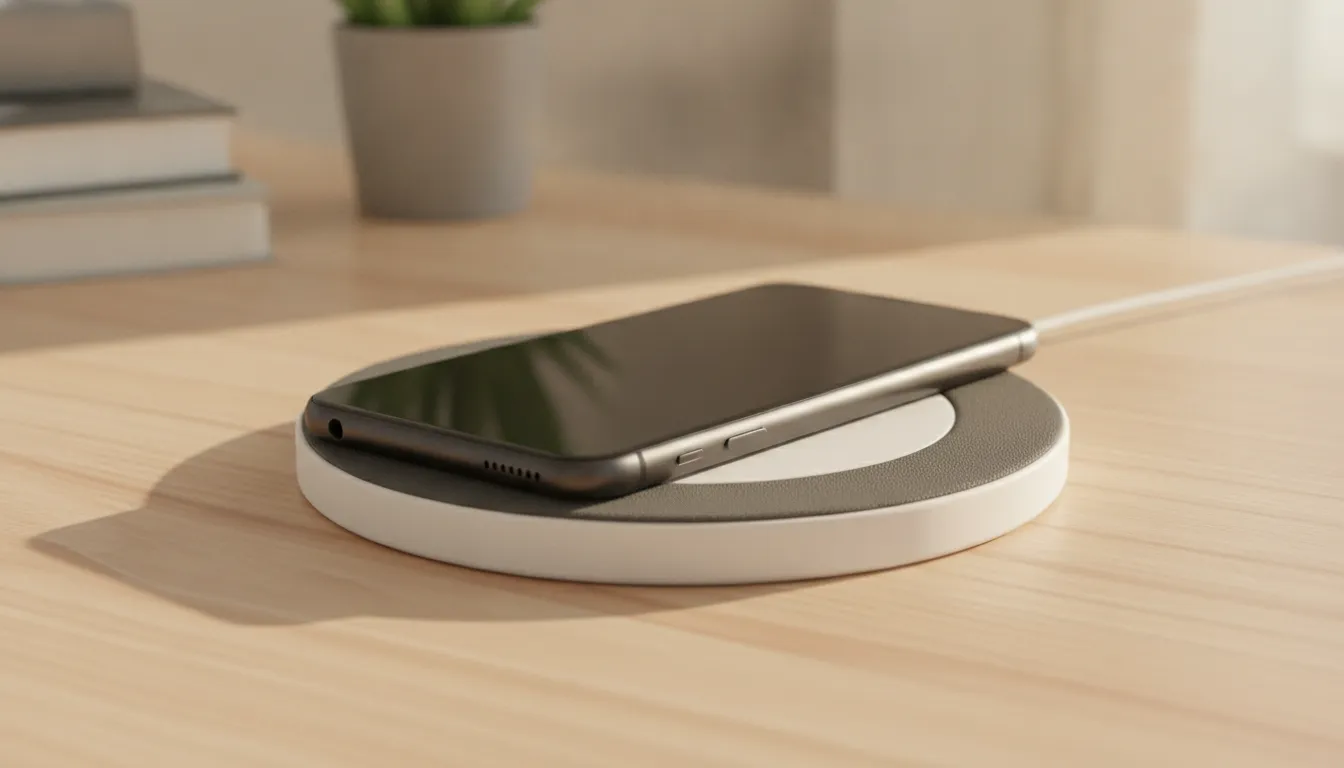
A smart way to solve this sliding problem is a raised rubber ring. This ring runs around the outer edge of the charging pad. It acts as a firm wall and a strong grip at the same time. This dual design ensures your phone stays put, even on slippery surfaces.
The KEUTEK fast wireless charging pad uses exactly this type of rubber ring on its charging surface. This rubberized outer ring keeps your phone in place when it vibrates or rings. The slim aluminum body is built for travel, but the rubberized top ensures the phone stays locked onto the sweet spot. Choosing a charger with these anti-slip design features makes charging much more steady.
Qi vs Qi2: What Compatibility Means for Your Anti-Slip Charger
The original Qi standard and its limits
Wireless charging relies on a shared set of rules. The oldest and most common standard is Qi, which uses magnetic coils to send power to your phone. To get a fast charge, you must line up the coil in your phone with the coil in your charger. If they do not align, charging slows down or stops.
Research from San Diego State University shows that bad alignment hurts how well the charger works and can even make the device hot. For a standard, non-magnetic pad, a secure wireless charger for cell phone needs a good grip to prevent sliding. Keeping your device steady ensures that the charging process stays fast and safe.
The rise of Qi2 and magnetic hold
The newer standard is called Qi2. It adds a ring of magnets around the charging coil. These magnets snap your phone into place. This auto-alignment means the coils match up right every time you set your phone down.
Because of this, Qi2 devices do not need friction as much to stay in place. The magnetic pull does the work. But if your phone does not support Qi2, or if you use a non-magnetic pad, you still need a rubber grip to keep things safe.
Friction grip vs magnetic alignment
Friction and magnets both keep your phone safe, but they do it in different ways. Magnetic chargers hold your device in one spot using force. This works well for phones with magnets, but it does not help devices without them. A quality wireless charger with a rubber surface works with nearly any device.
It uses friction to stop sliding, even if your phone has a smooth glass back. This grip is vital when your phone rings or vibrates on a flat surface. Many users prefer a pad that can power multiple types of devices. If you charge wireless earbuds, smartwatches, or older phones, Qi2 magnets will not help you.
A Qi-enabled fast wireless charging pad works with many different brands. While it is not Qi2, it provides up to 15W of fast power to any device that supports Qi. The rubberized ring keeps your phone centered, which stops heat buildup. It acts as a great anti-slip wireless charger without locking you into a single brand or model.
| Feature | Friction / rubber grip pad | Magnetic Qi2 alignment |
|---|---|---|
| How the phone is held. | A rubber or silicone ring holds the device by friction. | A magnet ring snaps the phone into coil-center. |
| Device compatibility. | Works with almost any Qi-enabled phone and case. | Needs Qi2 support or a magnetic case. |
| Hold during vibration and calls. | A strong grip keeps the phone from drifting. | A strong magnetic pull holds position. |
| Traditional case fit. | No special case is required. | Thick or non-magnetic cases may need a magnetic adapter. |
| Best for. | A broad device setup and multi-brand homes. | A single, newer phone with Qi2 or MagSafe. |
How Much Wattage Does Your Anti-Slip Wireless Charger Need?
Wireless chargers use different power levels. Most chargers give five, 7.5, ten, or 15 watts of power. To get the fastest speeds, your charger must match the power limit of your phone. If you use a weak pad, your phone will charge slowly, no matter how much power it can support.
Wireless charging wattage tiers
Many phone brands have unique power limits. For example, standard iPhones often charge at 7.5 watts on basic pads, while many Android phones can take ten or 15 watts of fast power. The KEUTEK 15W fast wireless charging pad provides full Qi-enabled power up to 15 watts. This high output ensures that both Apple and Android phones can charge at their top speeds.
Why coil alignment matters for charging speed
To reach these top speeds, induction charging needs precise alignment between the charger coils and your phone coils. If your phone slides even slightly off-center, the connection weakens and the charging speed drops. According to research published by San Diego State University, physical misalignment wastes power and can cause excess heat. In some cases, a small slip can stop the charging cycle fully, leaving you with a dead battery in the morning.
The value of an anti-slip wireless charger
To keep your phone in the perfect spot, you need a pad with a secure surface. Many standard chargers use smooth plastic or glass tops, which let your phone slide around easily. If your phone shakes from a text message or a phone call, it can shift away from the center. Using an anti-slip wireless charger solves this common problem by using rubber grips to hold your phone in place.
For example, a rubber ring or a textured surface keeps your device stable. Even when the phone gets many alerts, it will not slide. This simple design feature ensures that your charging coils stay aligned. You will get the full 15 watts of fast charging power from the start of your charge to the end of the day.
Desk, Nightstand, and Car: Choosing the Right Placement
Where you put your wireless charger changes how you use it. Each spot has its own risks. Your phone can slip because of bumps, shakes, or simple tilts. Choosing a charger with a good grip is the best way to keep your power flow stable on every surface.
The active office desk
On a busy desk, your charger faces constant motion. Shuffling papers, heavy typing, and daily bumps can slowly push your phone out of place. Even a small shift can stop your device from charging. To keep your setup running, you can connect your charging pad to fast wall chargers. A study on wireless power transfer shows that poor alignment can change the power path and create extra heat. An anti-slip wireless charger uses a high-grip surface to keep your phone seated right over the charging coil during a long workday.
The quiet bedroom nightstand
The nightstand is the most common place to charge a phone overnight. You need to know that your phone will charge fully while you sleep. But night calls or alarms can make your phone shake. On a slick plastic pad, this shaking can cause the phone to slide away from the center. You wake up with a dead battery. You should also keep credit cards or school badges away from these pads. A Stanford news post notes that charging heat can damage card antennas. A safe overnight spot needs a charger with a rubber grip to stop phone movement.
The moving vehicle console
The car is the most harsh charging space. Sudden stops, sharp turns, and road bumps create constant shaking. A standard flat charger can never hold a phone under these harsh forces. If the phone slides off the coil, charging stops right away. In a car, an anti-slip wireless charger is not just helpful, it is needed to prevent drops. A rubber grip keeps your phone steady on the console tray. For the best mobile setup, pair your grip pad with a high-power fast car charger. This ensures your phone gets steady power even on the bumpiest drives.
Why Your Phone Slides Off and How an Anti-Slip Charger Fixes It
The Physics of the Phone Slide
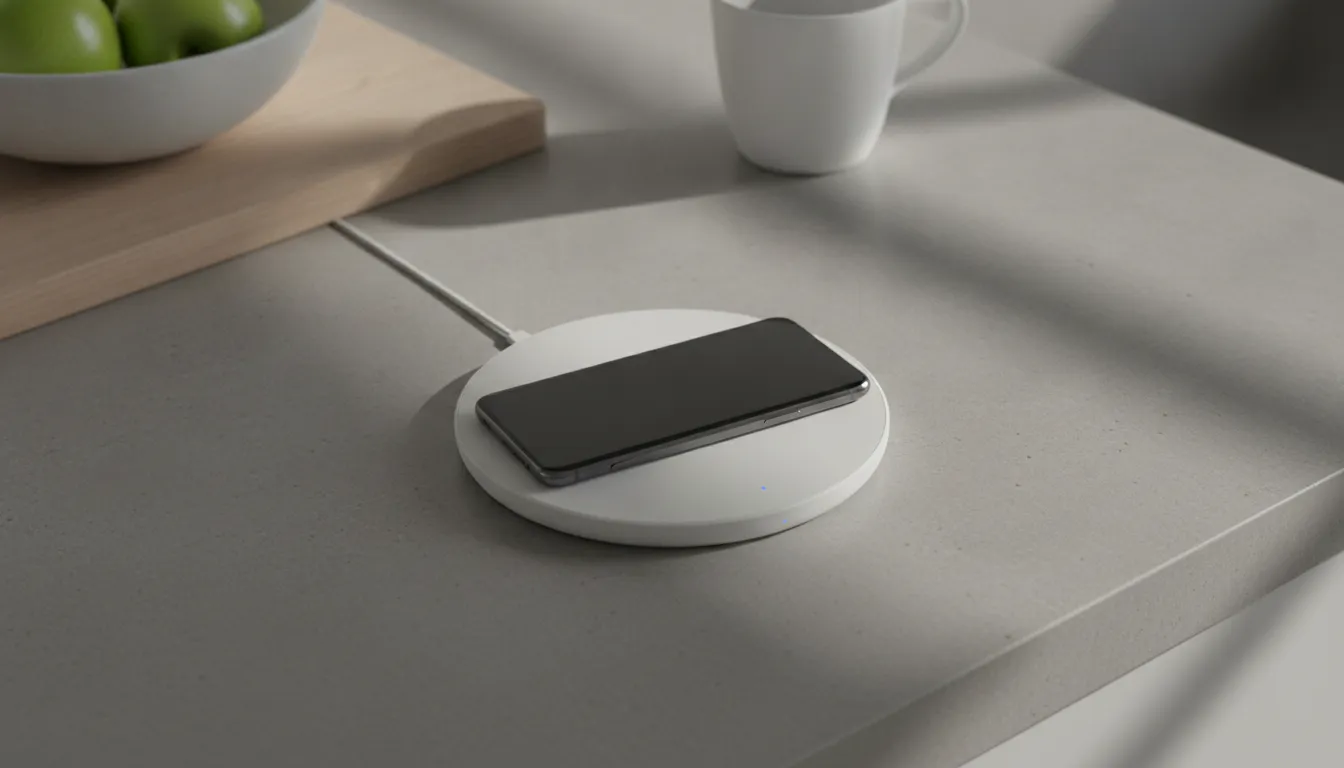
Modern smartphones often have smooth glass backs. These sleek surfaces look great, but they slide easily on hard plastic pads. If you bump your desk or place the charger on a slight angle, your device can drift away. The real trouble, though, comes from daily phone alerts. When your phone vibrates or rings, the tiny movements make it crawl across the slick pad. Over time, the device moves away from the center charging coil. This shifting stops the transfer of power, leaving you with a dead battery when you least expect it.
Risks of Coil Misalignment
When charging coils do not align, charging power drops. The system must work harder, which generates excess heat. Research from San Diego State University shows that misalignment affects the magnetic fields and power traits of the system. This extra heat is not just bad for charging speeds. It can also harm sensitive items nearby. For instance, according to Stanford University, heat from wireless pads can damage the tiny parts inside nearby ID cards. Keeping your phone centered is a matter of both speed and safety.
How Silicone and Rubber Grips Fix the Slip
An anti-slip wireless charger solves this issue by using high-friction materials. These pads use a silicone surface or a rubberized ring to grip the glass back of your phone. This extra grip keeps the device centered over the coil. Even if your phone vibrates from a call, it will not slide. KEUTEK uses this smart design in its own line. The KEUTEK fast wireless charging pad features a rubberized outer ring on the surface. This ring keeps your phone secure so your charge continues without a pause.
A stable, friction-based pad also protects your phone from falling. A charger on a bedside table is easy to knock over in the dark. With a secure grip, both the charger and the phone stay in place. This makes charging much safer in busy homes or workspaces. If you want a clean setup, look for fast-charging wireless pads with rubber grips. They keep your power flow steady and safe.
Explore the fast-charging wireless pads collection to compare non-slip charging options that fit your desk, nightstand, and car.
Frequently Asked Questions
Why does my phone keep sliding off my wireless charger?
Phones often slide off wireless chargers due to buzzing from incoming calls or texts. Sleek glass backs on modern devices have very little grip on smooth plastic pads. A charger with a rubber ring provides the grip needed to stay in place. Alignment is very important. According to a paper on the SDSU Chrismi database, bad alignment causes energy loss and extra heat.
Does anti-slip material affect wireless charging speed?
No, a thin anti-slip layer does not slow down charging speeds. Standard pads can charge through cases up to eight millimeters thick. The rubber grip ring on a quality pad is much thinner than that. It does not block the wireless signal at all. In fact, the grip ring helps keep speeds fast by holding the phone in the right spot.
Are anti-slip wireless chargers compatible with all phone cases?
Most anti-slip pads work with standard plastic, TPU, and rubber cases. However, they may not grip textured, fabric, or leather cases as well. Very thick cases can also block the charge. For example, a quality charging pad can power through cases up to eight millimeters thick, but heavy rugged cases may exceed this. If you use a very thick case, check its size before buying a charger.
Is an anti-slip wireless charger necessary for a car mount?
Yes, a secure grip is vital in a car. Road bumps and sharp turns will quickly slide your phone off a smooth pad. A car mount needs a strong clip, magnets, or a sticky surface to hold the phone. Without a good grip, the phone can slide, stop charging, or even fall and distract the driver.
Ready to Stop Your Phone From Sliding Off Your Charger?
Every time your phone slides off its charging pad, you risk waking up to a completely dead battery right when you need it most. Even small vibrations from incoming phone calls or silent text alerts can easily disrupt the power connection and halt charging without your knowledge. Upgrading to a stable charger right now ensures your device always stays fully powered, safe, and ready for any busy day ahead.
Ready to contact KEUTEK and get a premium charging solution? Do not let another slow or disrupted charge ruin your day. We make it easy to keep your devices ready and safe. Explore our selection of non-slip pads to shop the KEUTEK fast wireless charging pads collection.


Leave a comment